Good coffee will not be memorable to consumers because good taste is a standard in the industry, and therefore the product itself does not set your business apart anymore.
People do not memorize the technicalities behind your coffee’s roasting profile but the story of your brand, visual elements, and the particular emotion that comes with consuming your product.
The failure of your message to create an experience out of consumption, in which the consumer becomes the hero, results in the commodification of your business.
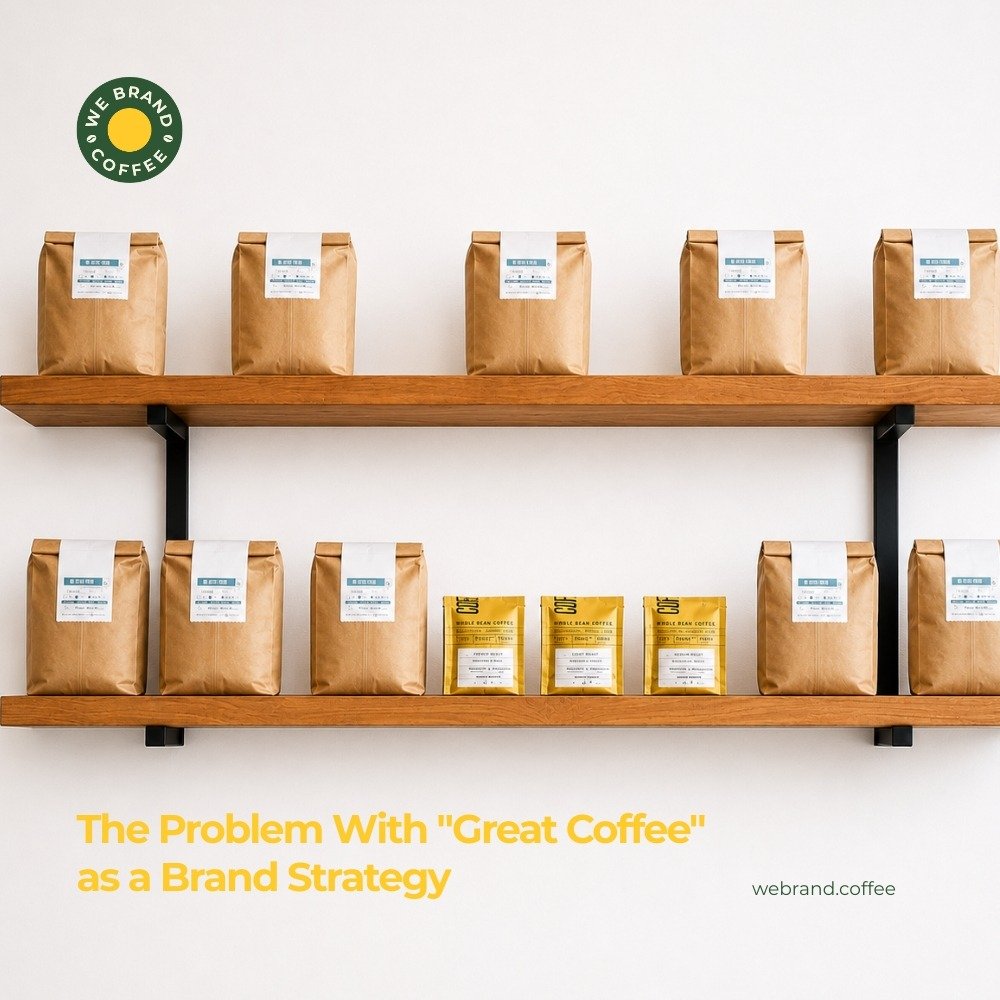
The Problem With "Great Coffee" as a Brand Strategy
Focusing only on the quality of the product in developing a brand strategy is a risky pitfall because quality is a given and no longer a distinguishing factor in the modern café industry. Instead of concentrating on technological aspects of the products, businesses should realign their focus to the identity, experience, and emotional association of consumers with the brand.
To achieve customer loyalty in the long run, brands need to recognize how the consumer feels after holding the coffee cup in their hand and align the physicality of the brand space and hospitality experience around that.
Why Quality Doesn’t Always Create Brand Loyalty
Product quality does not drive brand loyalty because it is just what customers expect from any brand and thus is nothing special. In such a situation, when competing brands produce equally good products, quality loses its uniqueness and becomes something for which it is not necessary to remain loyal to any brand.
Brand loyalty is a psychological and emotional attachment to a brand by a customer, and this is something that cannot be reached through quality alone. Branding should not be limited only to the features of a product, but rather brands should share values, provide excellent customer service, and foster feelings of community among consumers. People stay loyal to the brands that represent them personally, give them ease of use, and make them feel valued.
The Difference Between a Good Coffee and a Memorable Brand
Good coffee fills a physical desire, whereas memorable brands meet a psychological requirement. Good coffee is completely dependent on the beverage inside the cup, its proper grinding, precise temperature of water, and clean roasting process. Good coffee is a consumable product, which the consumer forgets immediately after the effects of the caffeine are washed out of his body; it can easily be replicated by any competitor who has the same taste profile and a bit lower price.
A memorable brand creates an emotional link, which determines where the consumer will go without being conscious about his desire for coffee. It turns the mundane process of drinking coffee into self-expression, using distinctive visual design, a common cultural value base, hospitality, and a special atmosphere to make the client feel understood. In other words, whereas good coffee only satisfies your tongue, a memorable brand creates an entire system of belonging.
What Your Packaging Is Really Communicating
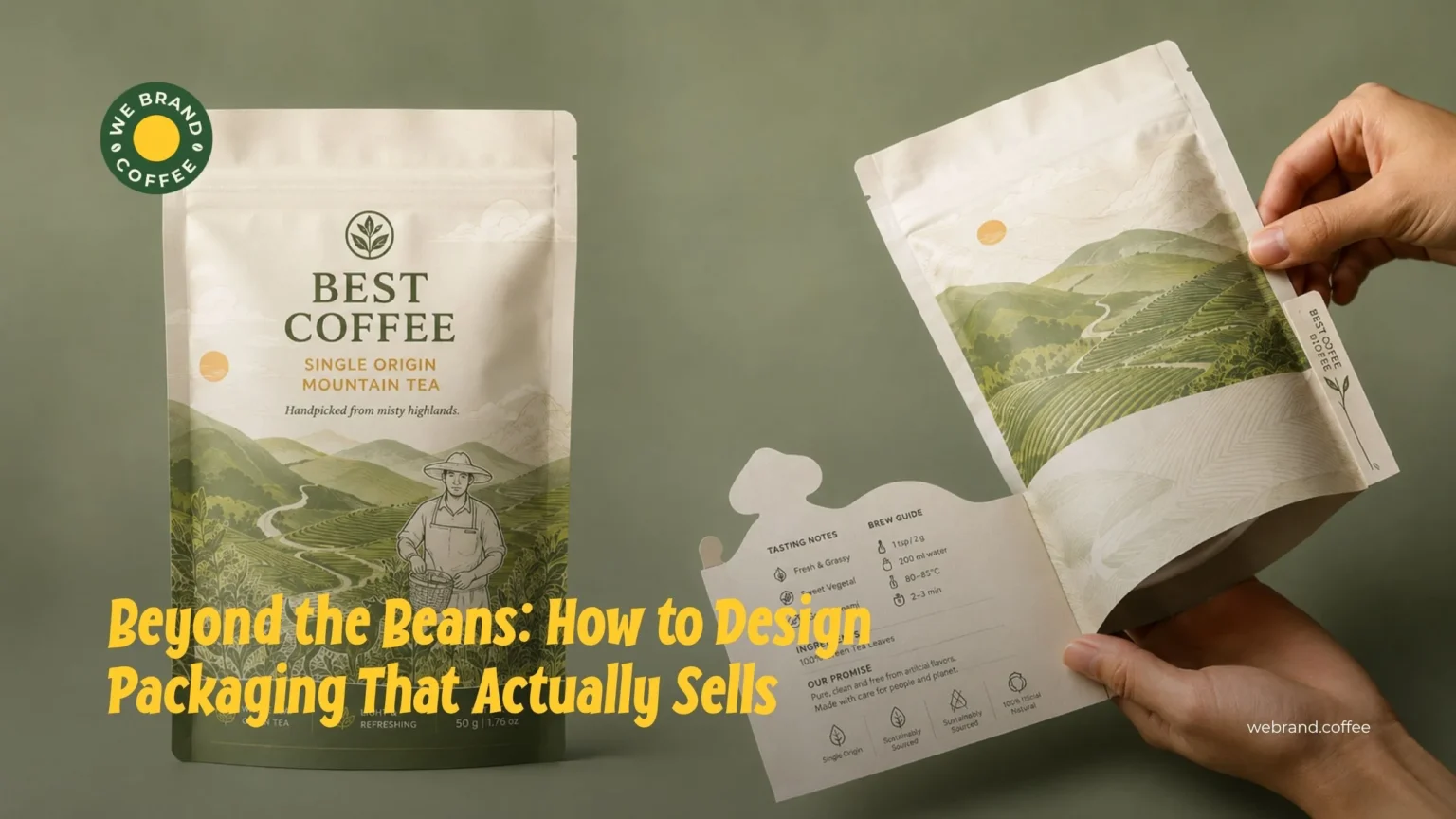
Your package is an unofficial messenger that tells all about your brand philosophy, pricing, and target customers in a matter of seconds with first glance. Visual elements are the elements that speak psychologically; a minimalistic matte finish suggests luxury, whereas bright colors suggest young accessibility. Consumers subconsciously interpret visual, material, and texture information to estimate the value of a product before they even touch it.
To have a strong effect on consumer memory, good packaging should evolve from a simple package into a marketing experience. Smart decisions such as scannability on the shelves, sustainable materials, and good tactile weight make a simple unpacking process become a memorable brand experience. In the end, if the packaging matches the consumers’ personality perfectly, it becomes their promotional tool.
How Coffee Brands Become Recognisable
A recognizable coffee brand establishes a unique visual identity and culture that helps the brand cut through the noise in the marketplace. Rather than using universal coffee visuals, such as brown beans or steaming coffee mugs, iconic coffee brands corner the market with unique visual elements like Blue Bottle’s sleek blue brand image or Starbucks’ green siren.
Their brand image is consistent down to the tiniest detail to ensure that the packaging design, website, and cafe design are all part of the same universe. In addition to their visual image, recognizable brands also create distinctive brand rituals and align with a unique subculture in order to create brand recognition. They develop repetitive rituals such as unique cup designs or unique packaging textures to create a habitual ritual out of their brand consumption experience.
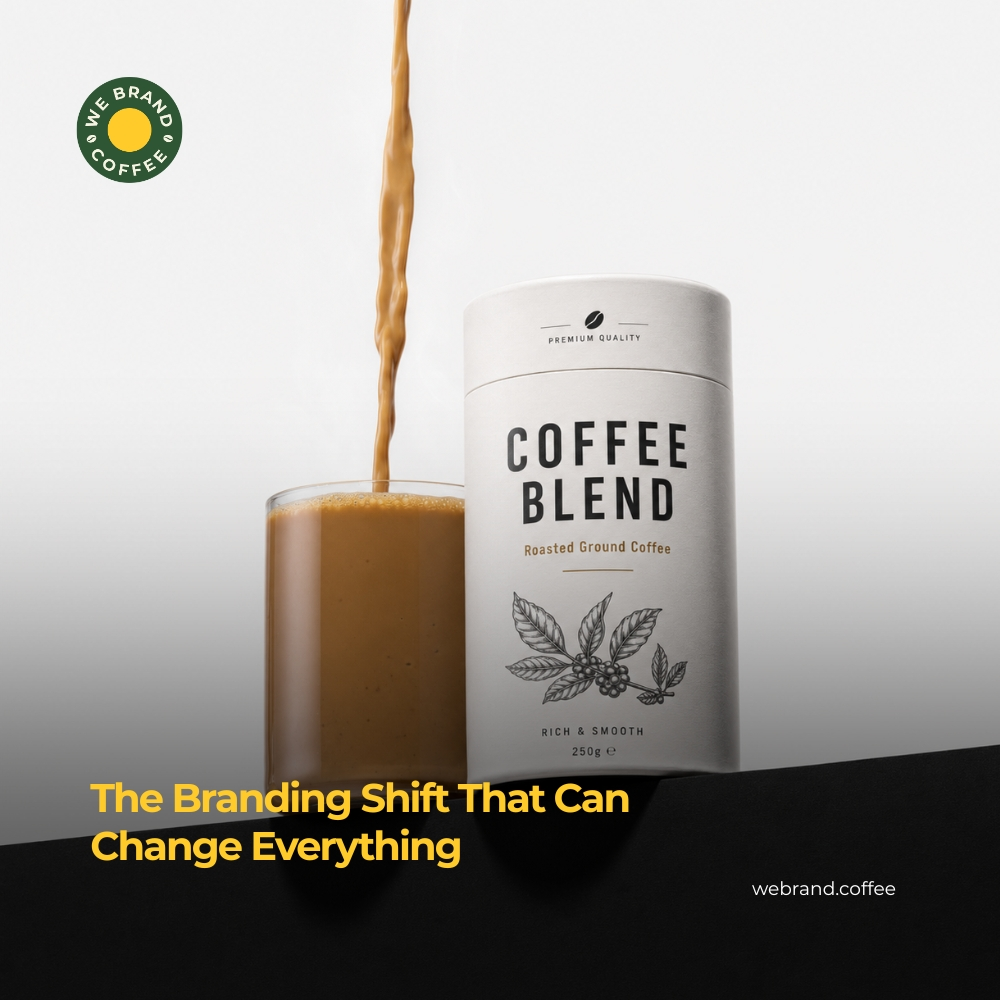
The Branding Shift That Can Change Everything
One single rebranding move that will literally transform all other moves into something else is a move towards identity-based positioning instead of product-based marketing. In other words, instead of focusing on product attributes and how your product is produced, you should focus only on one thing – your clients’ view about your brand.
When you stop selling commodities and start selling a way to express yourself, you make consumers think not logically about pricing but emotionally – about their own identity. And this means that you should change all your approaches and integrate them to build a single core of identity. Once a company manages to do this, it stops competing on product features, convenience, and price, since competitors cannot copy feelings that your brand brings to the consumer.
Conclusion
The product quality of the coffee is just a basic criterion for completing a transaction; a true brand identifies with the buyer’s personality and affiliation. Brand recognition can be established through replacing industry clichés with unique visuals, rituals, and very consistent sensory experiences. The way to do so is to stop thinking about what the product is and start thinking about who the buyer becomes.