Before You Rebrand Your Coffee Business, Answer This One Question

Recent Posts
Share this article:
Let’s just state the fact that most coffee rebrands fix the wrong problem before we get more into it. See, most coffee brands struggle with the same question: if the coffee is great, why isn’t the brand growing as fast as it should? And usually the instinctive answer is a rebrand.
A new logo, new packaging, a redesigned website, better photography, a cleaner social media presence, and yes, sometimes those changes help, but more often they don’t solve the real problem. As a coffee branding agency, it is really very delightful to see that every coffee roaster seems to have mastered the visual language of modern coffee branding. With bags looking beautiful, elegant typography, and carefully curated colour palettes, most coffee businesses aren’t surely suffering from a design problem.
So, what brings the rebrand question for a coffee brand? The answer lies in an understanding of uncertainties. See, somewhere along the way, many coffee founders become experts in sourcing, roasting, brewing, and serving coffee.
Even we have at We Brand Coffee, but the difference lies between a coffee brand founder and a team of individuals rooted in the idea of coffee shop branding strategy is stopping to ask one fundamental question of “Who are we actually brewing for?”
In this blog, We Brand Coffee breaks down why audience understanding should come before any coffee rebrand, and how, as a speciality coffee brand, you can identify the tensions that drive customer decisions. And how to tell whether your coffee brand actually needs a rebrand or simply a better expression of what already makes it valuable. Because what your customer is trying to resolve when they choose your coffee over everyone else is the question the answer to which might change far more than a rebranded coffee logo ever could.
Is it too late to ask about rebranding as a coffee founder?
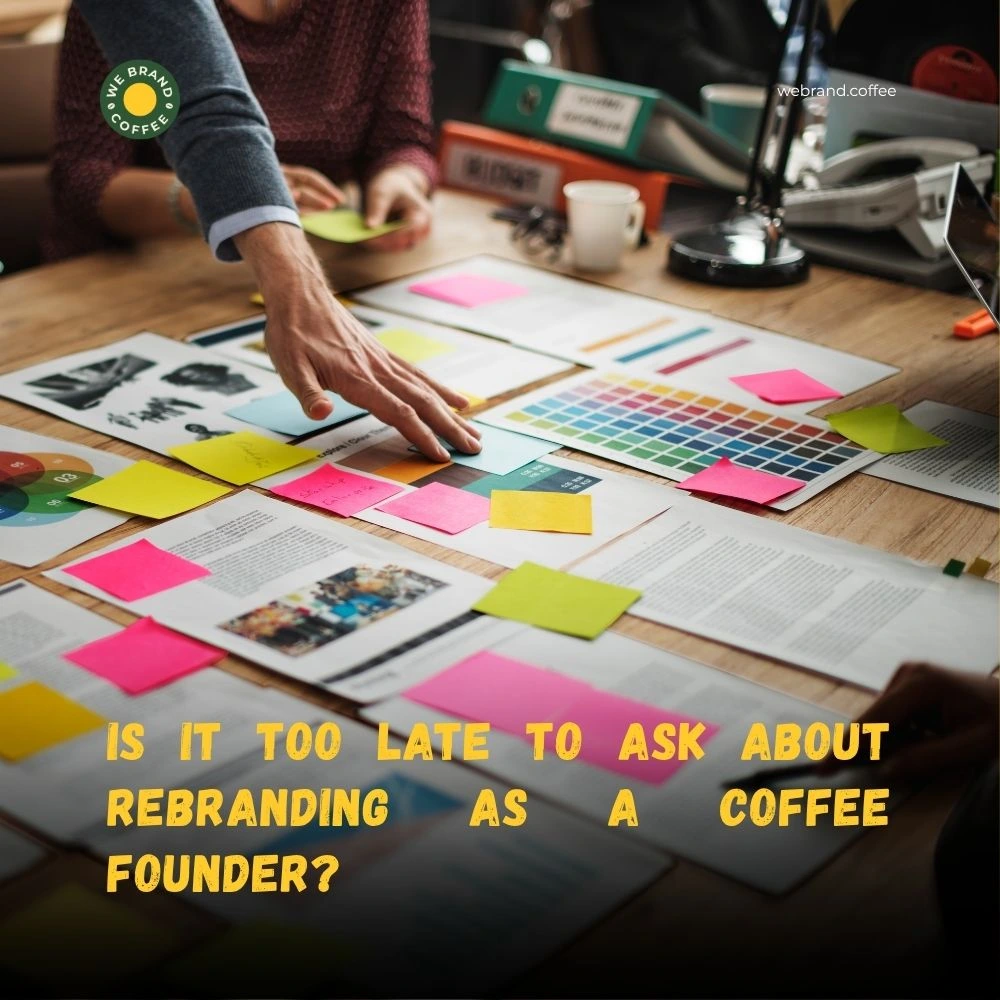
Before rebranding a coffee brand, there come the early days of survival where you are sourcing beans, finding suppliers, refining roast profiles, setting up the cafe, training staff, managing the cash flow, and convincing customers to try something new where building a speciality coffee brand means doing ten jobs at once, and coffee branding usually becomes whatever helps you launch quickly.
When a coffee brand logo gets designed, coffee packaging gets printed, an Instagram page also goes live, a website is built, and the coffee brand opens, the business grows, but the brand does not somehow.
Your coffee quality improves, the customer base expands beyond the neighbourhood, and maybe you have grown from just a coffee shop into a speciality coffee roaster, yet the question of rebrand comes in. However, for most coffee brand founders, this question of “Should we rebrand?” comes years later than it should.
While the assumption behind most coffee rebrands is that something looks outdated, the logo feels old, packaging feels inconsistent, or the cafe interior no longer reflects the quality of the coffee being served. Having said that, the deeper issue that one should look into before rebranding is a growth in:
- The audience
- The category
What is common in speciality coffee branding is that a coffee brand founder might begin by selling coffee to anyone willing to buy it, but over time the coffee brand discovers that their strongest customers are not casual coffee drinkers at all so suddenly the coffee branding shifts from built for “everyone” to disconnected from the people who matter the most.
That is where We Brand Coffee comes in to understand what role the brand plays in there customer’s identity, because it is the strategy that comes first, then you amplify the design. So the dilemma a coffee brand founder has is whether to spend enough time understanding the people you are brewing for or decide what the brand should become first.
Why is " 25- 35, urban, coffee lover " not an audience?

Young professionals, urban consumers, people between 25 and 35 who love coffee; these are the usual answers we get when we ask most of the speciality coffee founders who their audience is.
But when you see it from a coffee branding agency’s perspective, then these options tell us almost nothing because age is not just a motivation, location is not a belief and liking coffee is not a personality. For example, imagine walking into a room of 100 people, and probably everyone fits the description of being between 25 and 35, living in cities, drinking coffee. So would they buy from the same coffee brand?
The thing with understanding your coffee brand audience is that some people buy coffee because they are obsessed with flavour and origin, some buy it because it helps them focus at work, for some it’s a ritual, while others see it as fuel.
And from a branding perspective, all these are completely different people because knowing that your audience drinks speciality coffee doesn’t tell you why they choose one coffee roaster over another. For example, one speciality coffee drinker might be fascinated by craft coffee but feel intimidated by industry standards, while another might want cafe-quality coffee at home without spending cafe-level money every day.
So before you describe your audience as “25-35 urban, coffee lover,” ask a different question of what is the tension that brings them to us in the first place?
What the third wave actually changed and what it means for how coffee brands need to communicate now?

While most people think that the third wave of coffee has changed coffee as a drink, what it has changed is what we think. This is exactly the shift that holds a bigger impact on coffee branding than most coffee brand founders realise.
Because, as a coffee branding agency, to understand why so many speciality coffee brands struggle to differentiate today, it is necessary to first understand what the third wave of coffee actually changed.
Where coffee was all about convenience, consistency, and caffeine, the third wave has suddenly made coffee more about craft than beverage; it became more of a story, an origin, a process, a culture, and the third wave coffee has pushed people to ask questions they have never asked. So the challenge for modern coffee brands is that the third wave succeeded so well that its ideas became mainstream
However, coffee brand customers today expect quality, sourcing stories, and beautiful packaging, so once a speciality coffee brand stands out is not the minimum requirement to be taken seriously, and that is why many coffee founders feel frustrated. What we know is that coffee customers are no longer asking if they can find good coffee; rather, they are asking which of these good coffee brands deserves my loyalty. And those are very different questions.
So, for the coffee brand founders, this is an opportunity where the ones who move beyond talking about coffee itself and start talking about what coffee means to the people who choose it.
A rebrand vs. a visual refresh: the spectrum most coffee founders don’t know exists
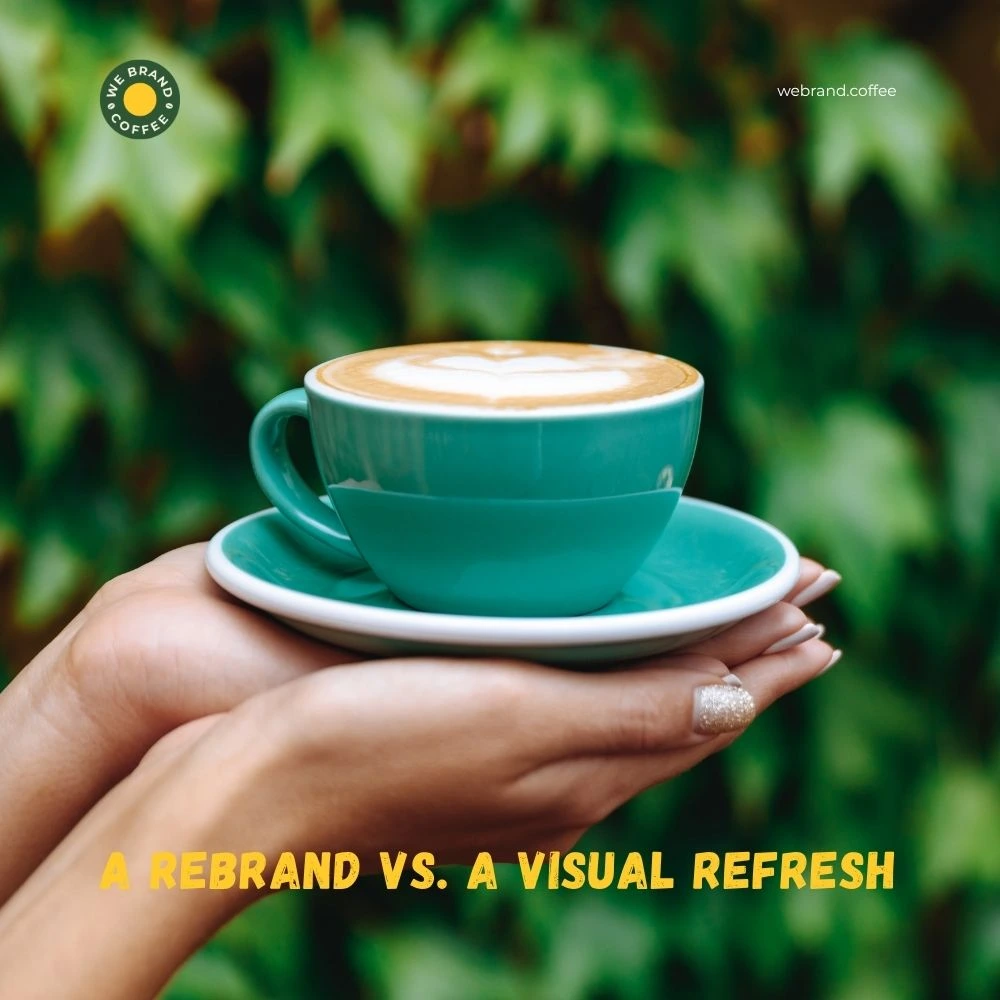
One of the most common mistakes that a coffee founder makes is asking the right question and solving the wrong problem. So where the question usually would sound something like “ Do we need a rebrand?” to “Why does our business feel like it’s outgrowing our brand?”
In fact, most coffee businesses spend months and even lakhs of rupees on a complete rebrand when what they actually needed was much simpler. You update the logo, redesign the packaging, launch a new website, refresh their social media presence, only to discover that customers still don’t understand what makes the coffee brand different.
Having said that, a visual refresh in coffee branding helps improve how the brand looks without changing what the brand fundamentally stands for. Here’s what the visual refresh for a coffee rebrand may include:
- Updating the logo
- Refining the typography
- Improving packaging design
- Creating a stronger website experience
- Modernising photography and visual assets
- Building consistency across customer touchpoints
However, a true rebrand is something your coffee brand needs when:
- Your audience has changed
- You are competing in a different market
- Your original positioning was never clearly defined
- The business has fundamentally evolved
The strongest coffee brands do not evolve by changing how they look; rather, they evolve by staying relevant to the people they brew for, and sometimes that requires a coffee brand refresh, and sometimes a complete coffee rebrand and knowing the difference is often what separates a brand investment from a branding expense.
A practical exercise: map your audience’s tension before you brief any designer

A coffee rebrand does not start with a designer; rather, it begins with a series of uncomfortable questions. So before you brief a designer, before you create a mood board, and before you start collecting references from other speciality coffee brands, answer these questions.
- Why do customers choose us instead of a nother coffee brand?
- What has changed since we first started?
- Who are we really serving today?
- What tension are we helping customers resolve?
- What do we want to be known for five years from now?
- If we launched today, would we build the same brand again?
- Has what we stand for changed or just how we look?
The goal with coffee branding is not a better design but a better alignment.
Conclusion
In conclusion, the best coffee rebrands are the ones that understand the brief in depth and understand the tension your audience is trying to resolve.
Hence, at We Brand Coffee, we believe that the strongest coffee brands are not built through trends, aesthetics, or design references; rather, they are built around people who understand the people you brew for and where meaningful coffee branding begins.
FAQ
Rebrand when your sales stagnate, your target market evolves, or your current visuals look outdated next to competitors. If your current identity and outdated coffee shop logo design no longer reflect the quality of your roast, a strategic rebrand is necessary.
Changing your visual identity too drastically can alienate existing loyal customers who rely on visual recognition to reorder. Rebrands must maintain core brand elements while modernizing the overall coffee shop branding aesthetic to avoid losing customer trust.
Yes, retaining signature colors, core iconic motifs from your original cafe logo, or brand taglines helps preserve existing brand equity and customer familiarity. Evolving recognizable elements bridges the gap between your established customer base and new buyers.
Launch a transparent marketing campaign explaining the reasons behind the visual evolution and highlighting improved product quality. Engaging customers behind the scenes on your updated coffee website design builds excitement and turns the rebrand into a major sales event.
Audit all existing touchpoints, update packaging inventory timelines, and brief team members on new brand guidelines. Ensuring complete alignment across physical store assets and digital platforms guarantees a smooth brand transition.
Recent Posts
Related Posts