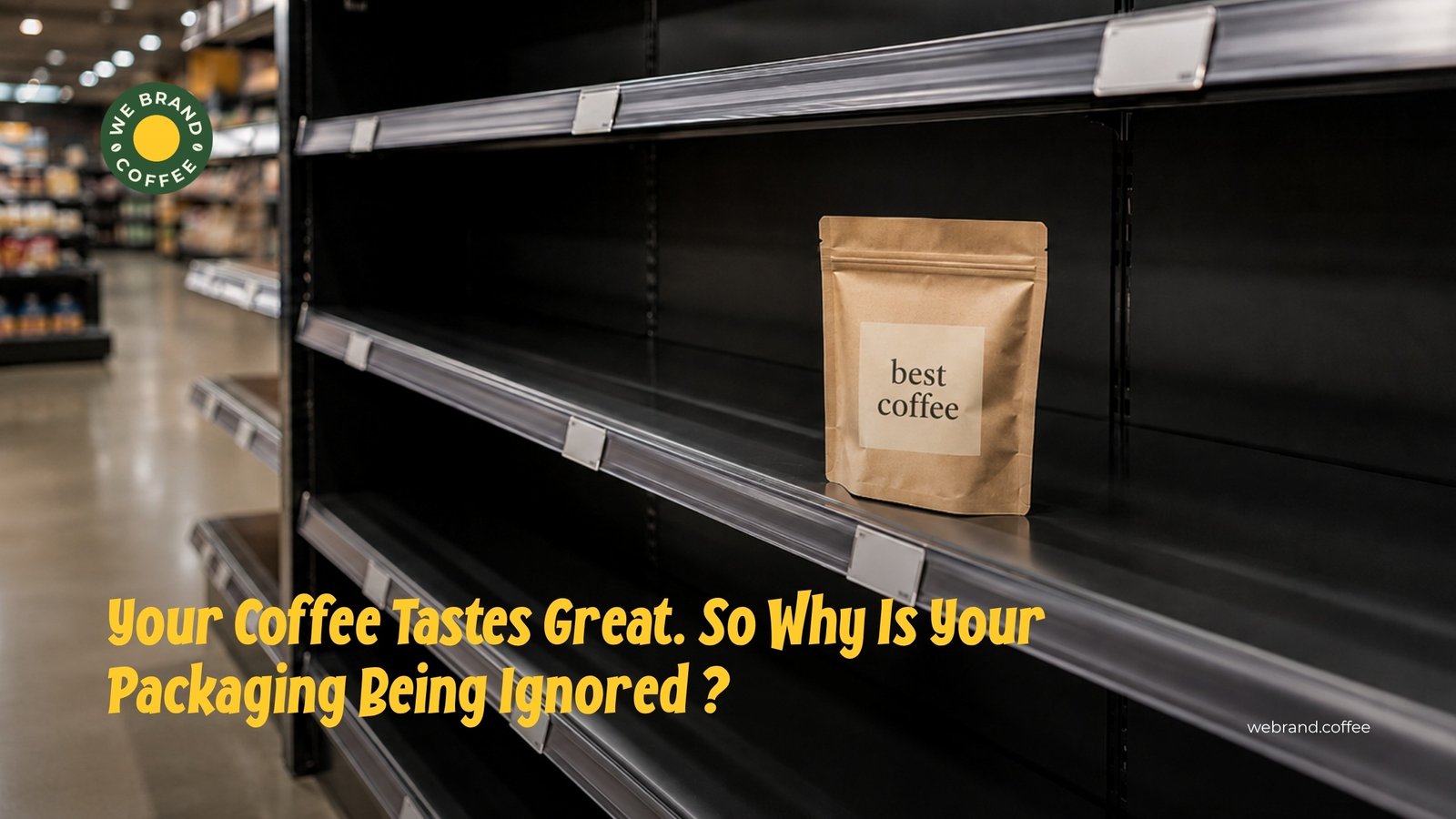
Your Coffee Tastes Great. So Why Is Your Coffee Packaging Design Being Ignored?
Recent Posts
Share this article:
A great taste of the coffee will fail to impress consumers since good taste is a benchmark in the industry, and hence the product itself fails to differentiate your firm from others.
Technical details of the roast of your coffee are never remembered by people, but the story about your brand, visuals, and the particular feeling experienced when drinking your coffee are remembered.
As a result of the failure of your message to turn consumption into an experience where the consumer is a hero, your enterprise ends up being commodified.
The Problem With "Great Coffee" as a Brand Strategy
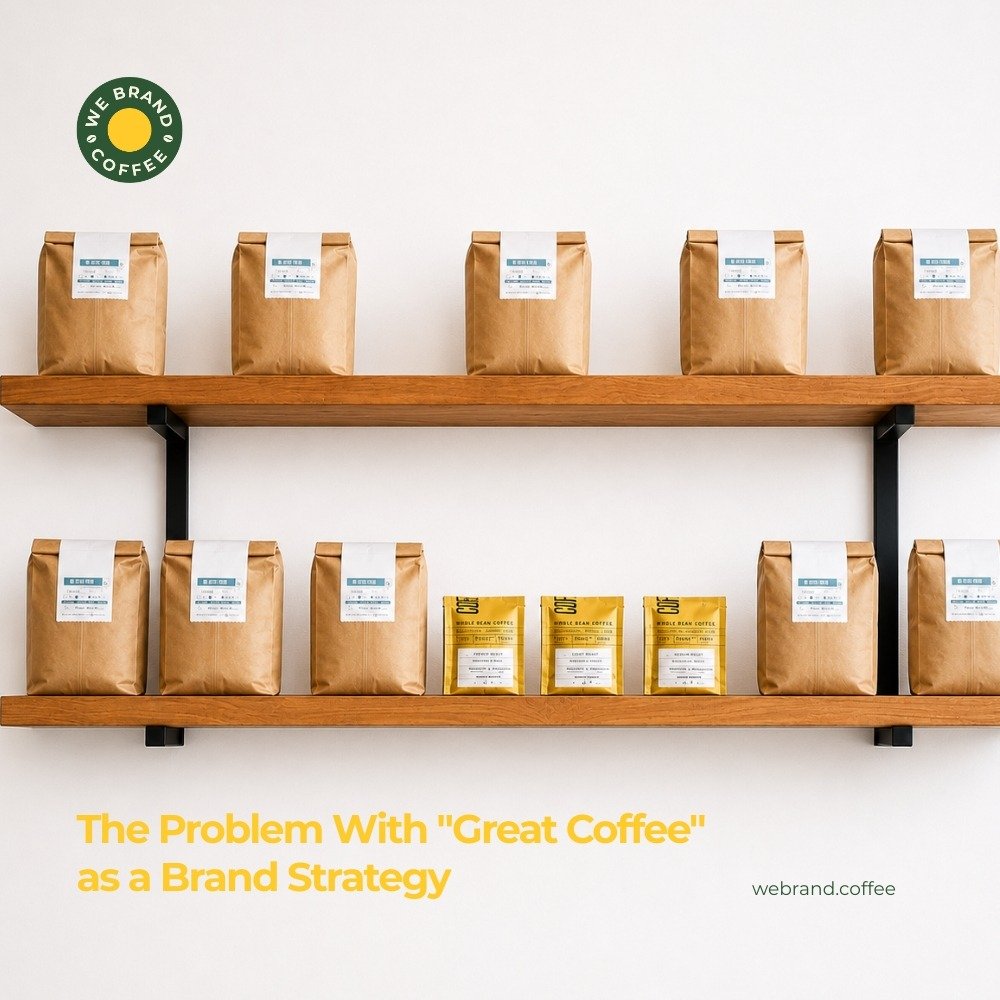
Limiting the development of the brand strategy only to the quality of the product is a trap because the quality of the product is assumed and is not a distinctive feature of the current café industry. Therefore, the attention of companies must be shifted from the technological features of the product to consumers’ identity and experience with the brand.
To foster a loyal customer base in the long term, the brand will have to be aware of the way that the consumer is made to feel after holding the coffee mug in their hands.
Why Quality Doesn’t Always Create Brand Loyalty
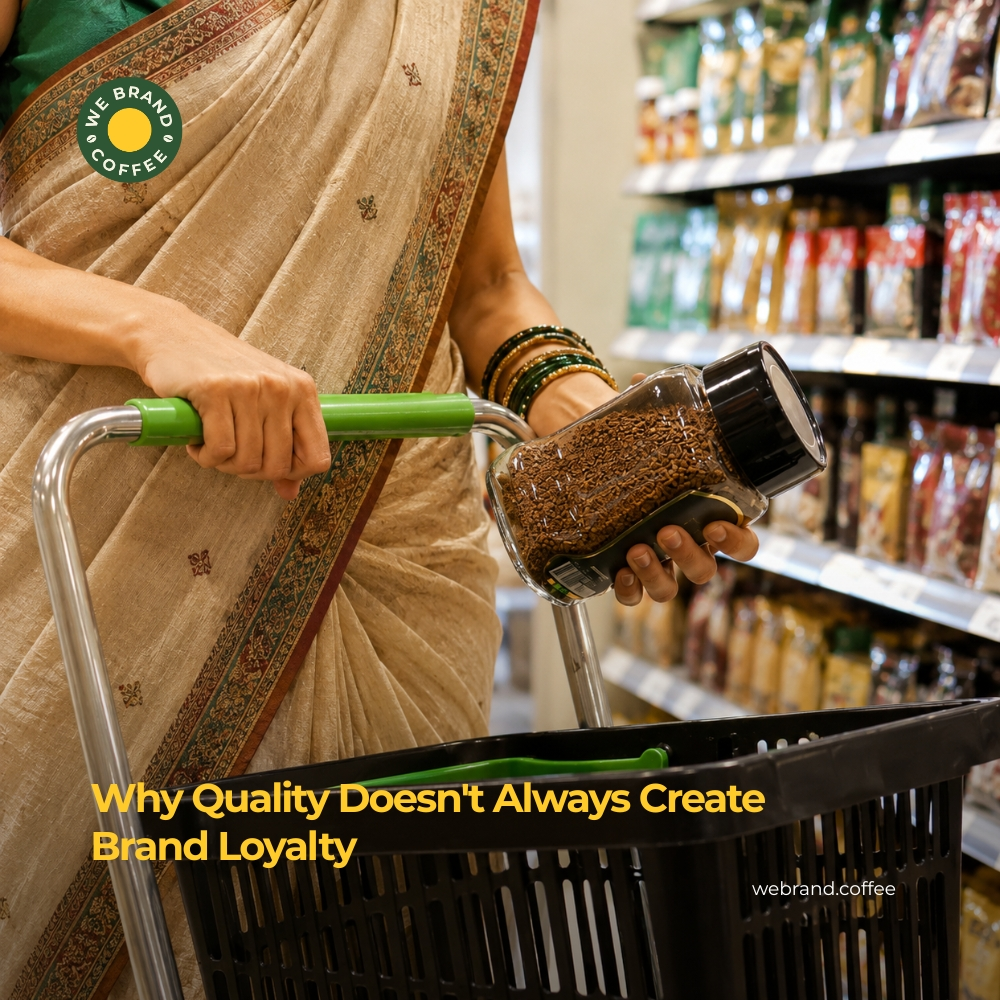
The quality of products does not motivate people to be loyal to the brand because it is the minimum that one should expect from any brand and therefore cannot be anything unique. In this case, since the products offered by other competing brands are as good as those of your own, quality is no longer unique.
Loyalty towards a brand is an emotional attachment developed by the consumer for the brand, which is not achievable based on quality alone. Coffee branding must go beyond just focusing on the qualities of the product to sharing its values, offering good customer service, and developing a sense of community among the consumers. Consumers remain loyal to the brands that have personal value for them and offer them usability and appreciation.
The Difference Between a Good Coffee and a Memorable Brand
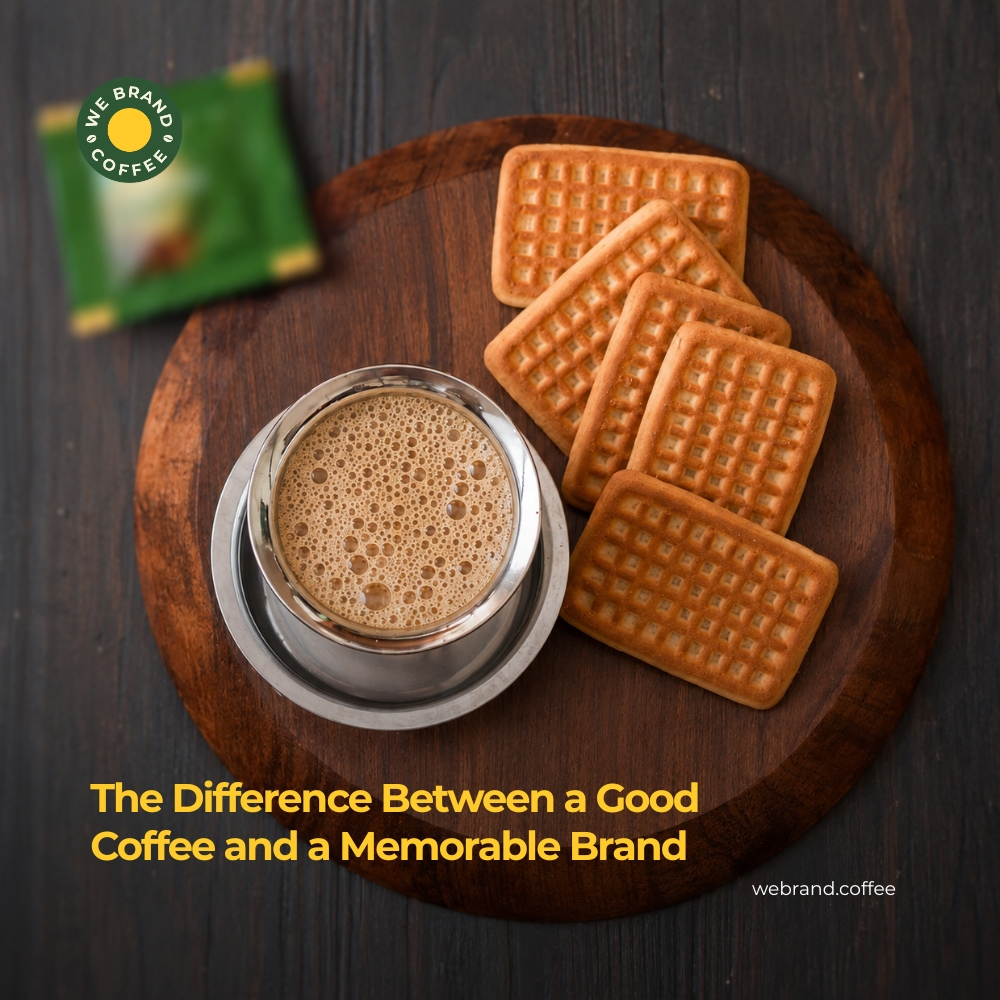
A good coffee satisfies a physical need while a branded coffee satisfies a psychological need. Good coffee is entirely dependent upon the content of the coffee in the cup; its proper grinding, its proper temperature of water, and a proper roasting procedure. Good coffee is a tangible product that the consumer forgets once the effect of the coffee’s caffeine wears off in his or her system. This can easily be duplicated by a competitor that has the same flavor profile and a slightly lower price.
Remembering a brand means establishing an emotional connection that defines where the customer will proceed unconsciously, driven by the urge to have coffee. This turns the boring act of drinking coffee into self-expression through visual design, cultural values, hospitality, and a unique atmosphere to ensure that the client feels heard. In simple terms, while good coffee makes you feel happy with your tongue, a memorable brand ensures the entire system of belonging.
What Your Packaging Is Really Communicating
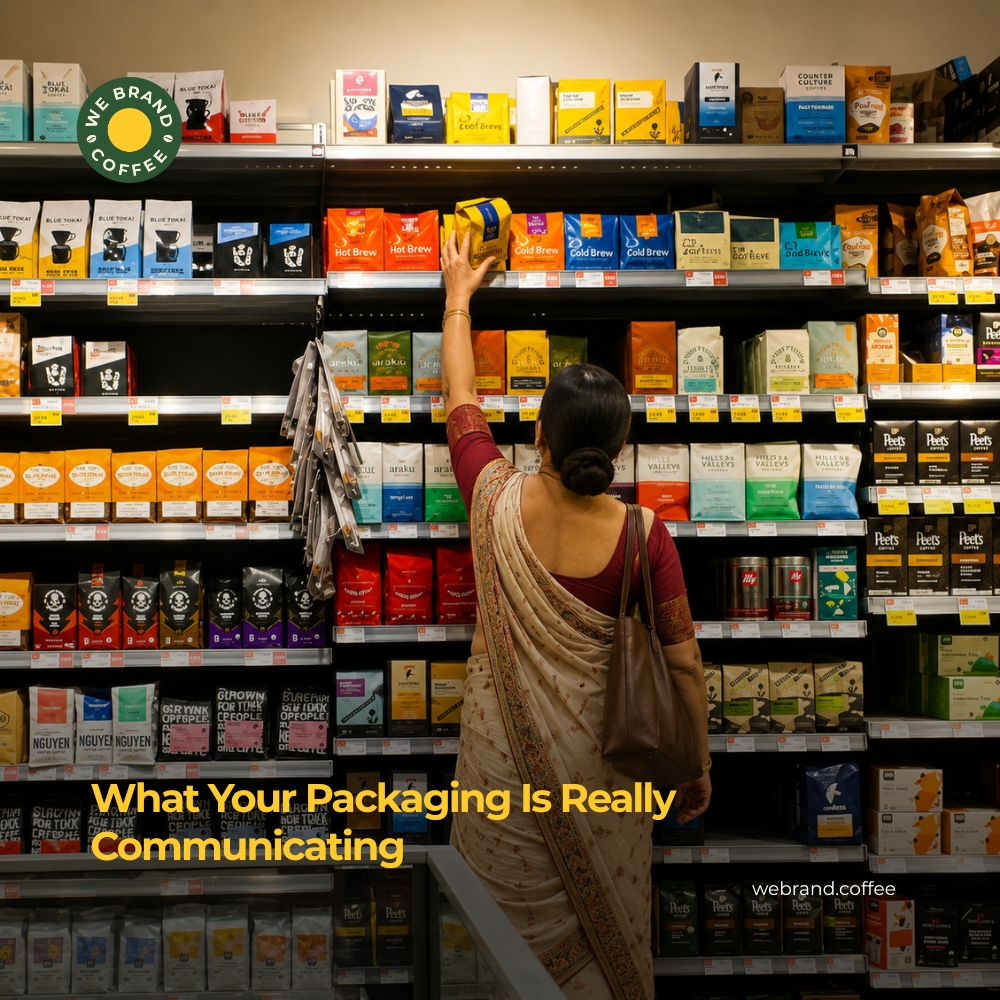
The way your packaging communicates without actually being able to do so speaks volumes about your brand philosophy, pricing strategy, and the target consumer in just a few seconds. Visual cues are the cues that communicate in psychological terms; a minimalist matte finish communicates luxury, while bright colors communicate youth and accessibility. Consumers interpret visual and tactile cues unconsciously in order to assess the value of the product.
The effective way to influence the memory of consumers is that the design of good coffee packaging must move from being a simple package to a brand experience. Making smart choices like scan-ability on the shelf, sustainability, and proper tactile weight can change a simple unboxing experience into an exciting brand experience. Ultimately, when the packaging design of a coffee shop matches the personality of consumers, then it is their promotional tool.
How Coffee Brands Become Recognisable
An identifiable coffee brand creates a unique visual culture that enables it to stand out in the marketplace. An identifiable coffee brand does not use any general visuals of coffee, such as brown beans or a steaming mug of coffee, but uses unique visuals of the brand, such as the blue design for Blue Bottle and the green siren logo of Starbucks.
Their brand image is so consistent down to the smallest element to make sure that their coffee packaging design, coffee website, and coffee café brand design come from the same universe. Aside from their visual image, recognizable brands are known for creating distinctive brand rituals and being aligned to a distinct subculture in order to generate brand awareness. They come up with repetitive rituals such as unique cups or unique packaging and coffee design textures to create a routine out of their brand experience.
The Branding Shift That Can Change Everything
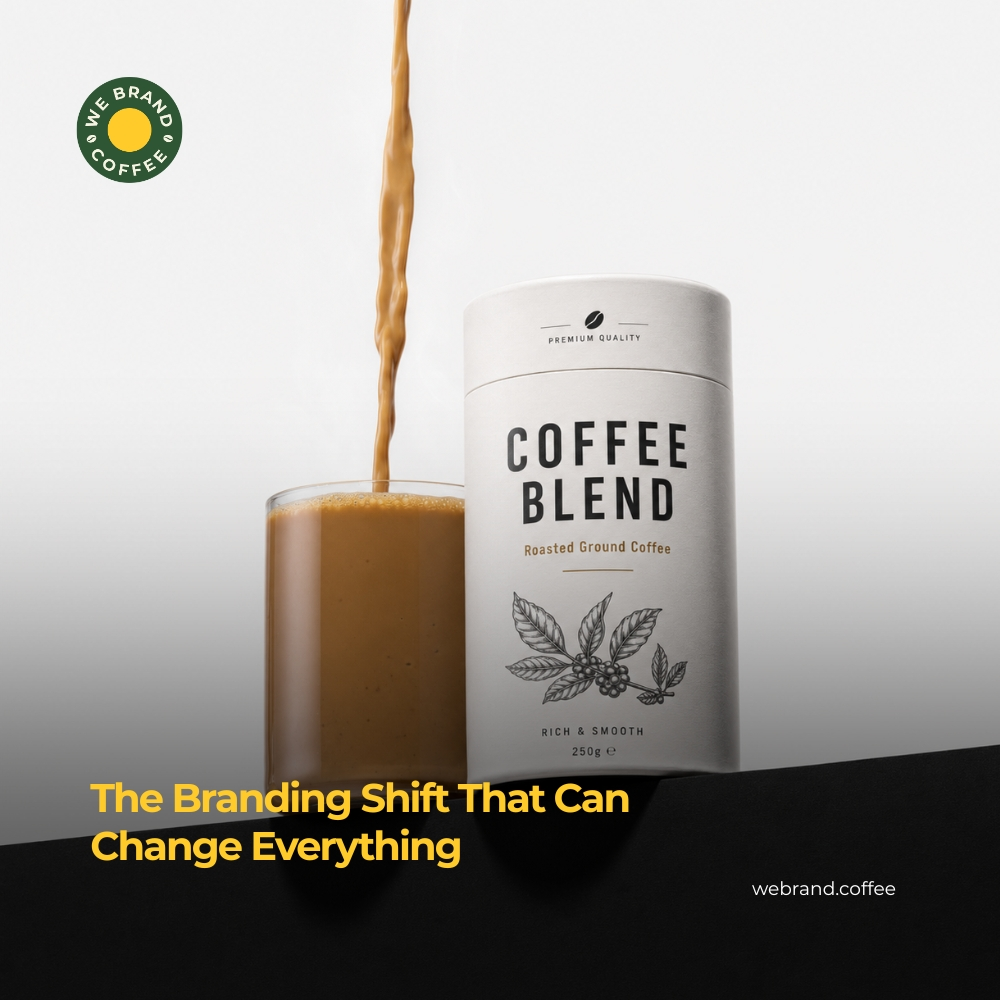
The key rebranding strategy that can turn all others into something totally different is the strategy for repositioning from product-based to identity-based positioning. In other words, you should forget about your product and the process of its production and concentrate solely on one thing – what your clients think about your brand.
The moment you stop promoting commodity sales and begin promoting the way to self-expression, your customers start viewing prices emotionally, rather than logically, in terms of their own identity. Therefore, you need to change all your strategies and to combine them in order to create a core identity. The minute the company does it, it no longer competes based on features, comfort, and price, as competitors simply can’t replicate the emotions of your brand for the customer.
Conclusion
Quality of the coffee product is only a primary factor that makes a deal possible; a real brand, however, relates to its consumer personally and culturally. To build brand awareness, it is necessary to change stereotypes of the industry with unique visuals, rituals, and a highly consistent sensory experience. How to do it? It is necessary to forget about what the product is and think about who the consumer becomes.
FAQ
Most coffee packaging design fails to grab attention because it plays it safe – muted tones, generic layouts, and no clear story. Shoppers make split-second visual decisions, so if the design doesn’t create instant contrast or curiosity, it gets scanned past and forgotten.
Effective food packaging design combines clear visual hierarchy, distinctive color and typography, and a design language consistent across the product line. It’s not just about looking nice – it’s about being recognized in under a second, whether on a physical shelf or a crowded e-commerce grid.
FMCG packaging design has to work at scale – across multiple SKUs, retail formats, and price points – while still keeping instant brand recall. It leans on repeatable design systems (color coding, consistent logo placement, structured layouts) so customers recognize the brand fast, even in a crowded aisle.
Good food product packaging design balances visual appeal with function: freshness preservation, clear labeling, and materials that reflect brand values like sustainability. Looks get attention, but structure and practicality are what earn repeat purchases.
Food packet design often gets treated as an afterthought, but for smaller formats it’s frequently the only touchpoint a brand has with a first-time buyer. A well-designed packet builds trust and signals quality instantly, which is critical when there’s no bigger box or shelf display to lean on.
Recent Posts
Related Posts