Recent Posts
Share this article:
India’s specialty coffee sector is undergoing a rapid transformation, with independent market research confirming a sharp climb in valuation and a decisive consumer pivot away from instant coffee.
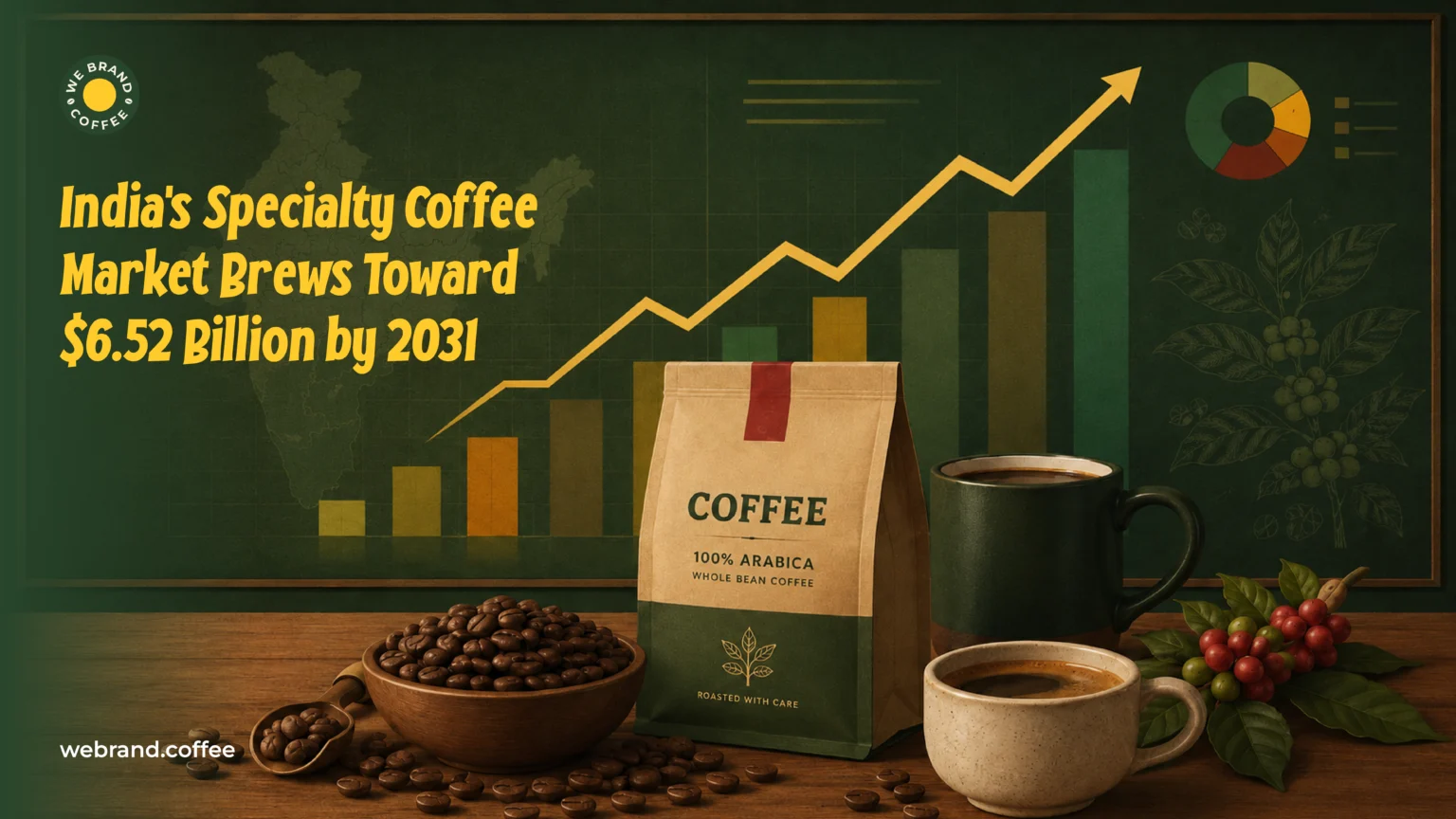
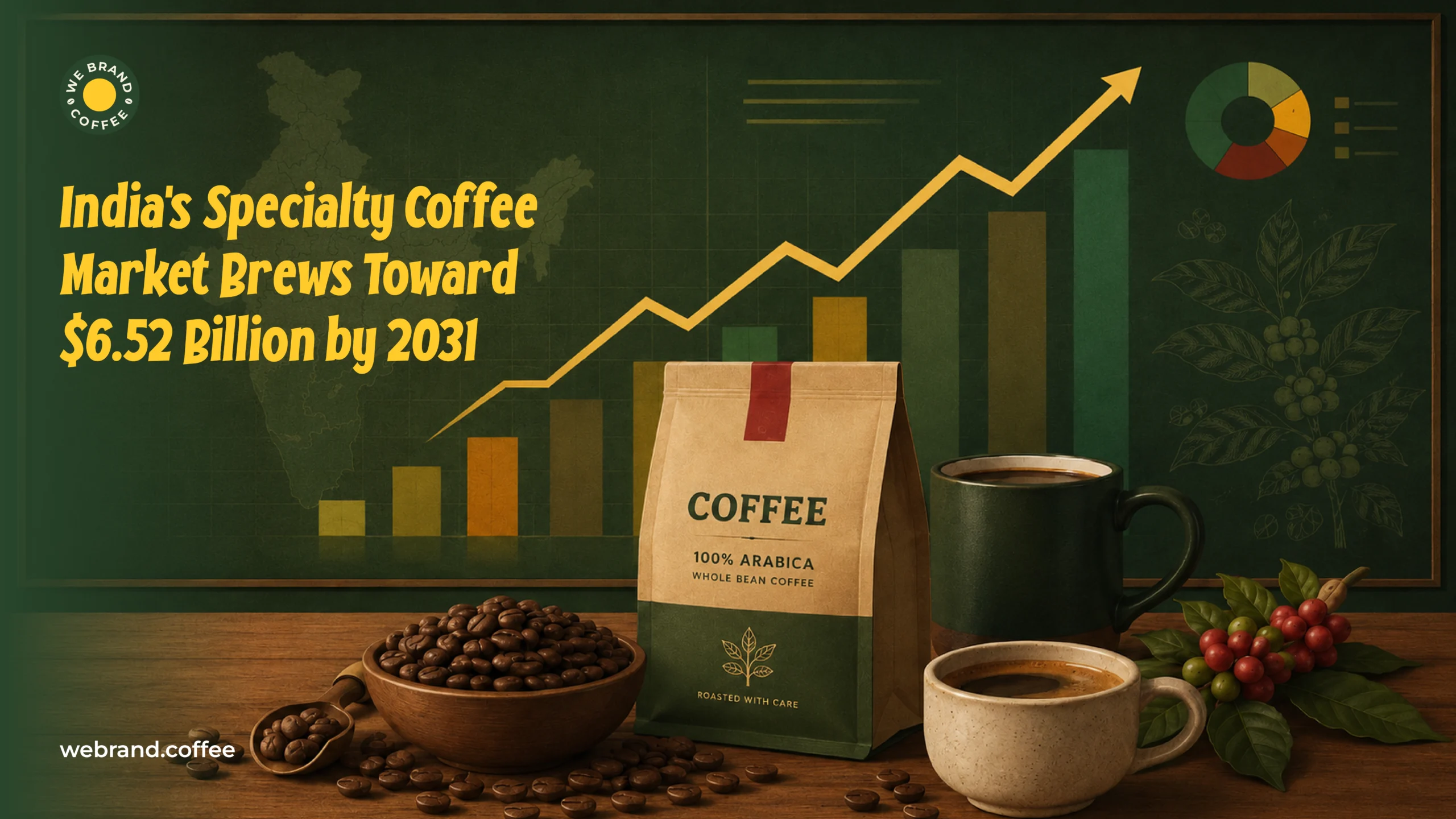
The Indian specialty coffee market, valued at USD 3.01 billion in 2025, is projected to reach USD 6.52 billion by 2031, growing at a 13.7% compound annual growth rate. The growth is driven by rising consumer awareness about premium coffee, evolving taste preferences, and increasing café culture in urban areas. Consumer habits are shifting accordingly — away from mass-market instant coffee toward single-origin beans, traceable farm-level sourcing, and alternative brewing methods.
Domestic chains are leading the expansion. Blue Tokai is accelerating its growth strategy, planning to expand its café network from around 240 outlets to 800 by FY30, positioning itself to capitalize on India’s premium coffee boom. The chain intends to open nearly 120 new cafés this financial year alone, expanding across key metros while entering new cities such as Ahmedabad and Lucknow. Third Wave Coffee Roasters, meanwhile, operates over 90 cafes across cities including Bengaluru, New Delhi, Pune, Mumbai, Chandigarh, Gurugram, Hyderabad, and Noida. On the consumer side, drinkers are increasingly seeking out complex flavor profiles once associated mainly with wine tasting, moving toward black coffee to better appreciate origin-driven notes.
The boom has intensified through 2025 and 2026, with growth forecasts extending out to 2031.
Growth is expanding beyond major metros into tier-2 cities. On the sourcing side, roasters are concentrated around India’s established coffee belts. Chikmagalur, where coffee was first introduced to India over 350 years ago, remains a flagship specialty region known for high-altitude terrain and legacy estates, while Coorg, India’s most productive coffee-growing region, is prized for its bold, aromatic, full-bodied cups shaped by a unique monsoon ecosystem. Sub-regions within Chikmagalur, such as Bababudangiri, are increasingly used as origin labels by specialty roasters, typically signaling a direct estate relationship rather than a district-level blend.
Beyond these established hubs, emerging origins are gaining recognition. In Koraput, Odisha, homegrown brand Kruti Coffee has earned national recognition for producing award-winning coffees while working directly with tribal farmers to build a sustainable, globally competitive coffee ecosystem. More than 80% of the farmers the brand supports are women, who play a central role in cultivation and decision-making.
Domestic coffee producers are investing in sustainable farming, organic certifications, and direct trade practices, boosting market credibility, a shift that mirrors consumer demand for transparency and quality. Industry executives point to significant “white space” in India’s branded café market despite intensifying competition, with rising disposable incomes and changing urban lifestyles fueling demand.
Roasters are building the sector through direct-trade relationships and micro-lot sourcing rather than commodity-scale purchasing. Competition is intensifying as international and domestic players expand simultaneously; Starbucks, operating through its joint venture with Tata Consumer Products, plans to add up to 100 stores annually to its existing network of more than 500 outlets, while Third Wave Coffee, Café Coffee Day, and Barista are also growing their footprints. Blue Tokai expects revenue to cross ₹8 billion this financial year, up more than 50% year-on-year, and is also preparing to open its first international café in Dubai.
Despite the momentum, challenges remain: delivering fresh, seasonal microlots efficiently through quick-commerce platforms continues to test the logistics of direct-to-consumer roasters operating at this new scale.
FAQ
Coffee shop aesthetics focus on how a café looks, including its interiors, colour palette, furniture, packaging, and visual style. Coffee branding goes much deeper. It defines what a coffee brand stands for, who it serves, what makes it different, and why customers should choose it over competitors. While aesthetics create a first impression, coffee branding creates long-term recognition, emotional connection, and customer loyalty.
A great coffee shop design can attract attention, but it cannot explain why your business exists or what makes it memorable. Strong coffee branding gives customers a reason to choose your café, recommend it to others, and return repeatedly. Design influences the first few seconds of customer perception, while coffee branding influences how people remember and experience your business over time.
A coffee branding agency helps coffee businesses build a clear and distinctive identity before creating visual assets. This includes developing brand positioning, naming, messaging, brand voice, storytelling, customer experience strategy, packaging direction, and visual identity systems. The goal is to create a coffee brand that communicates a consistent and meaningful story across every customer touchpoint.
Related Posts