Recent Posts
Share this article:
Coffee cafe branding is much more than just good beans. With competitors piling up- third-wave roasters, legacy players, and instant coffee giants- successful brands are not just the tasty ones but the ones customers remember, trust, and are ready to be loyal to.
The recall takes time, and the memory is built through the branding on the bag, colour palette on the shelf, website, and the aroma of the coffee. Coffee branding shapes the authenticity of your coffee.
That memory is built at every interface: the name on the bag, the colour palette on the shelf, the website checkout flow, even the smell of the café. Coffee branding is the discipline of shaping all of it deliberately, instead of leaving it to chance.
To make it happen, an expert coffee branding agency comes in. Unlike generalist design studios that treat your coffee like a consumer product, an agency will understand the supply chain from farm to roastery to cup, and channels that feel more authentic than generic.
1. Brand Strategy
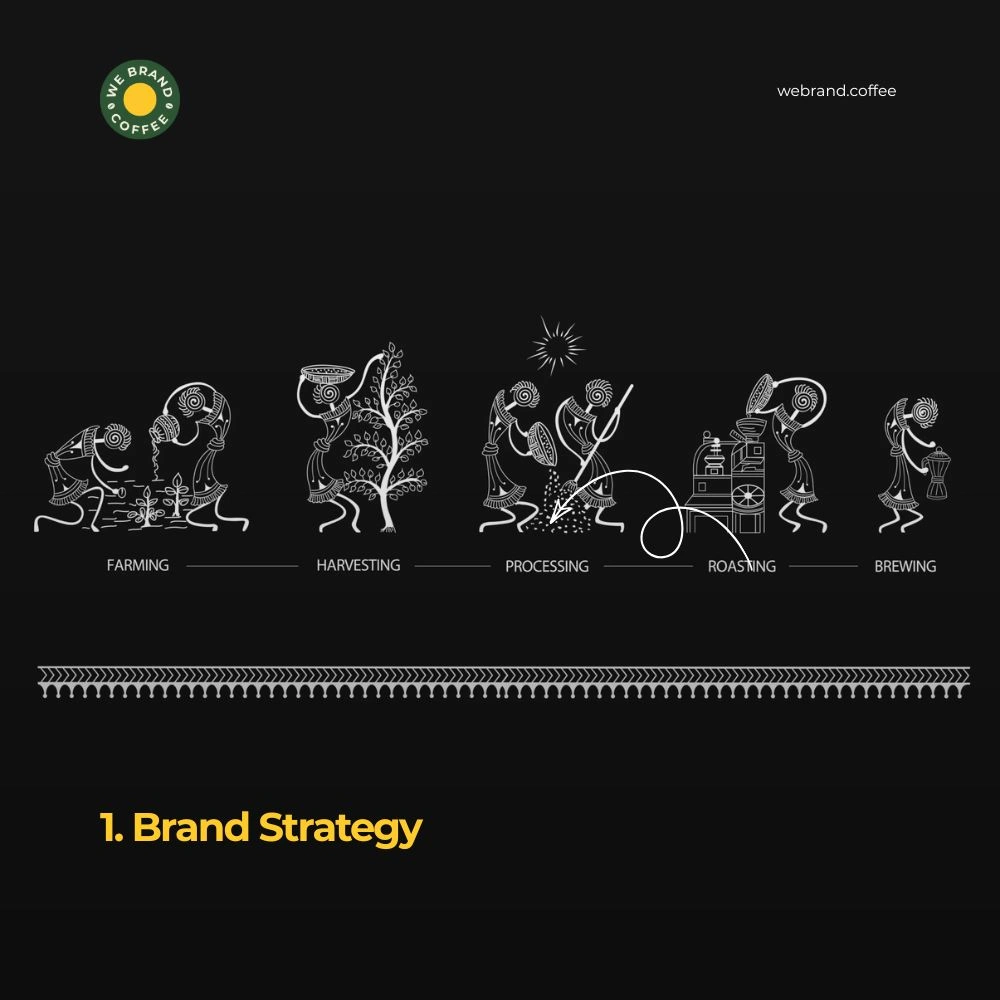
Without positioning, the coffee brand is destined to produce nice logos and attractive coffee packaging but without anything that would set it apart. Ignoring positioning is the most widespread mistake in branding and costs a lot more than one may think because this mistake results in nice visuals but not an idea behind a brand.
As mentioned above, the positioning step includes defining where your brand stands among others, whether you’re going for an accessible everyday roast, single-origin expert brand, sustainability-focused company, or just a brand that reminds people of home-cooked coffee.
Positioning gives a reference point for every other choice a brand makes, so that every element of a visual identity becomes cohesive rather than contradicting each other. Besides positioning, it’s essential to develop a brand personality and voice. Should your brand be fun or sophisticated, minimalistic or maximalistic, science-oriented or heart-driven? The brand personality should be reflected in packaging text, social media captions, and even customer support communication style.
Finally, at the strategy stage, there should be a definition of the target audience and analysis of the competition. Depending on whether the target customers are home baristas who care about extraction ratio or regular office workers who need their coffee just to start their day, a brand should have different positioning and communication style.
Together with knowledge of what competing brands do, this allows you to find a unique angle and develop a clear mission statement for why you sell coffee and how it is different from others.
2. Brand Identity & Logo Design
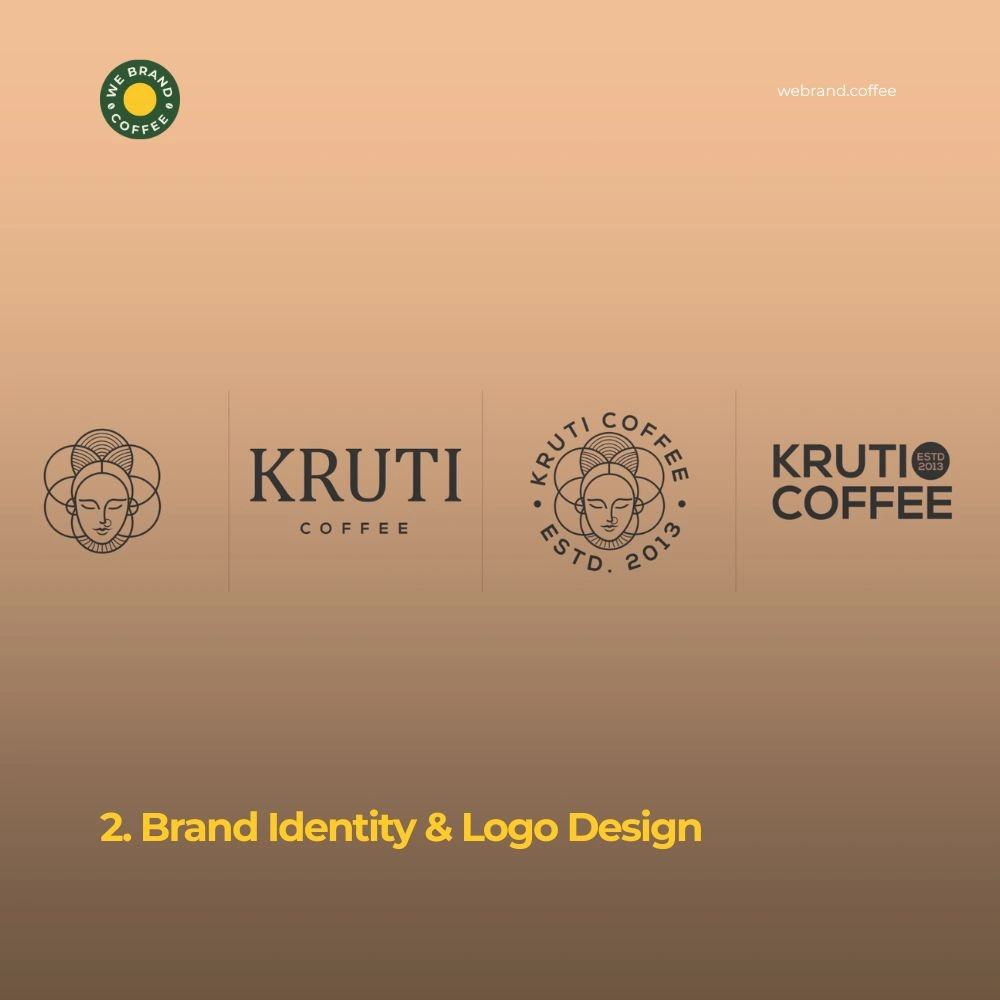
The most important part of branding is creating brand identity. Brand identity starts with naming through brainstorming and validating names that are memorable, ownable, and available as a domain and trademark. Then comes logo design that works at every scale, from the tiny cup to a large cafe signboard, without losing its impact.
Colour palette and typography come next, where the colours are not chosen for appeal but to attract your customers. Earthy tones convey artisanal, single-origin sourcing, with bold contrasting colours that invoke energy and modernity. This establishes the strategic positioning, not just any trends.
This way, you can build out a broader visual language and design systems like icons, patterns, illustrations, and photography that help with brand consistency. This is not just about creating something appealing; this is about crafting identity elements that showcase the brand story before customers read a single piece of copy.
This is where the benefits of having practical experience in the coffee industry come into play; understanding the subtle differences between how naturally processed coffee from Ethiopia feels compared to washed coffee from Colombia, for example, can make a big difference.
3. Packaging Design
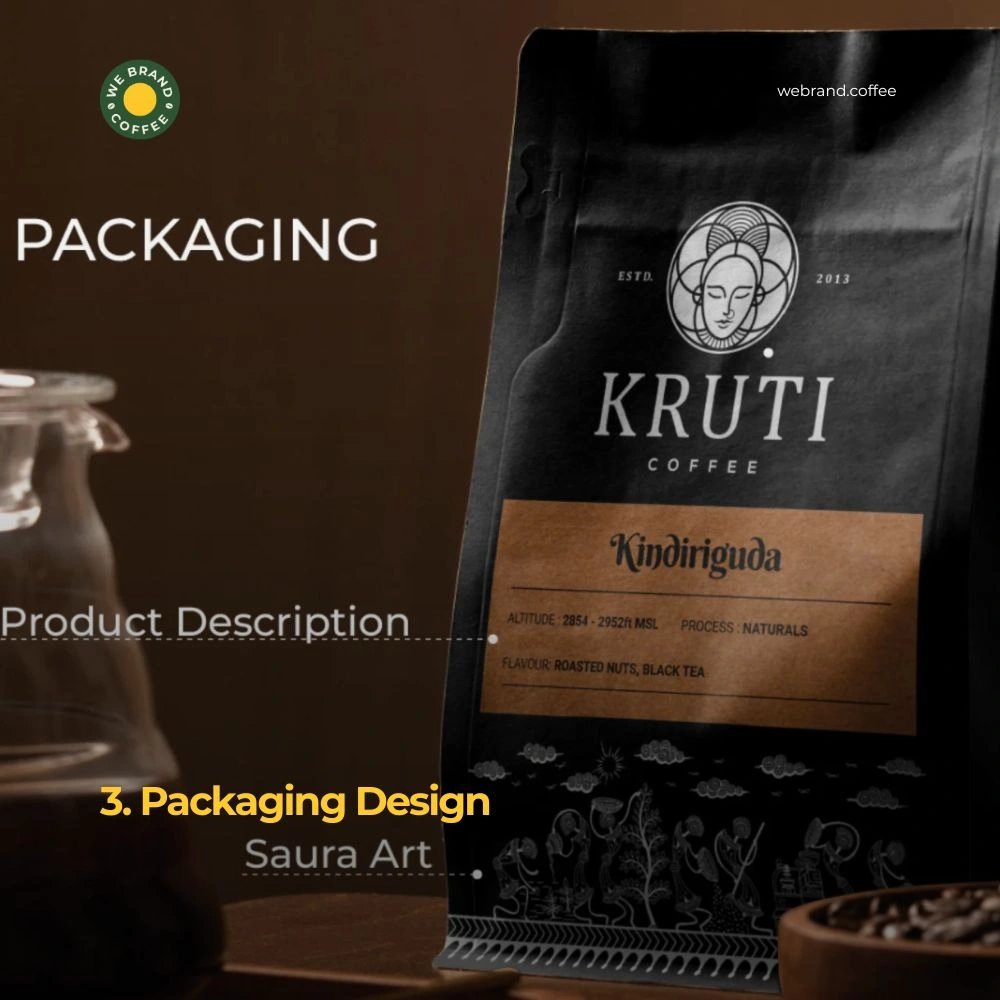
Packaging is normally the first thing that people notice in the beginning, as it is a physical interaction for customers. It needs to make an eye-catching impression amid competition on the shelf or in the Instagram feed while at the same time conveying the brand story in limited space through origin information and brand philosophy.
Packaging must be functional as well, as it conveys necessary information about roast level, tasting notes, brewing instructions, weight, and freshness date so that customers can understand what they are buying and how they should use it. As coffee is highly susceptible to oxygen, light, and humidity, the choice of material and the valve system used have an impact on its shelf life and taste.
4. Website Development
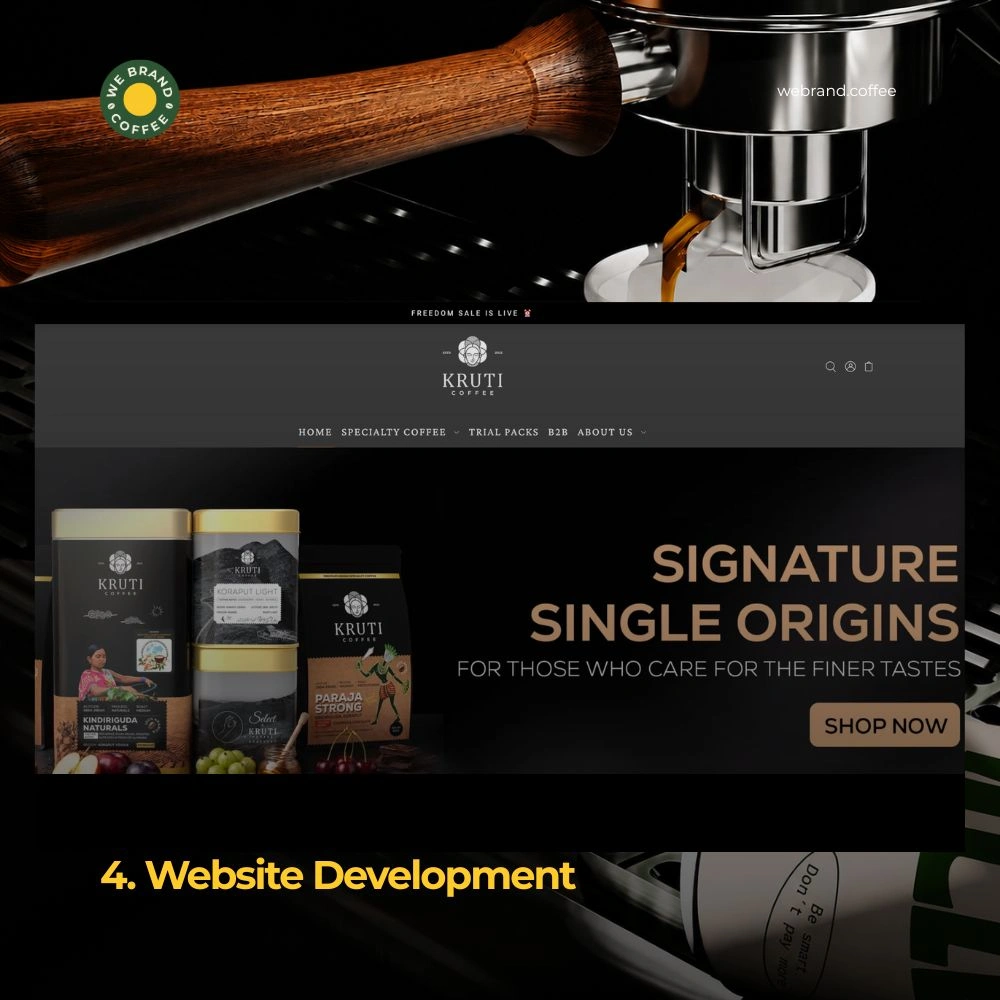
Websites are another part of building your brand, as customers would want to know more about you. The main intention of the website is to build trust and credibility. This is the platform where, as a coffee cafe brand, you share your discounts, subscriptions, gift sets, and checkout flows. The coffee website also consists of storytelling pages that bring your brand to life. This is also a place for coffee brands to share their origin story, farmer partnerships, etc.
5. Social Media & Digital Marketing
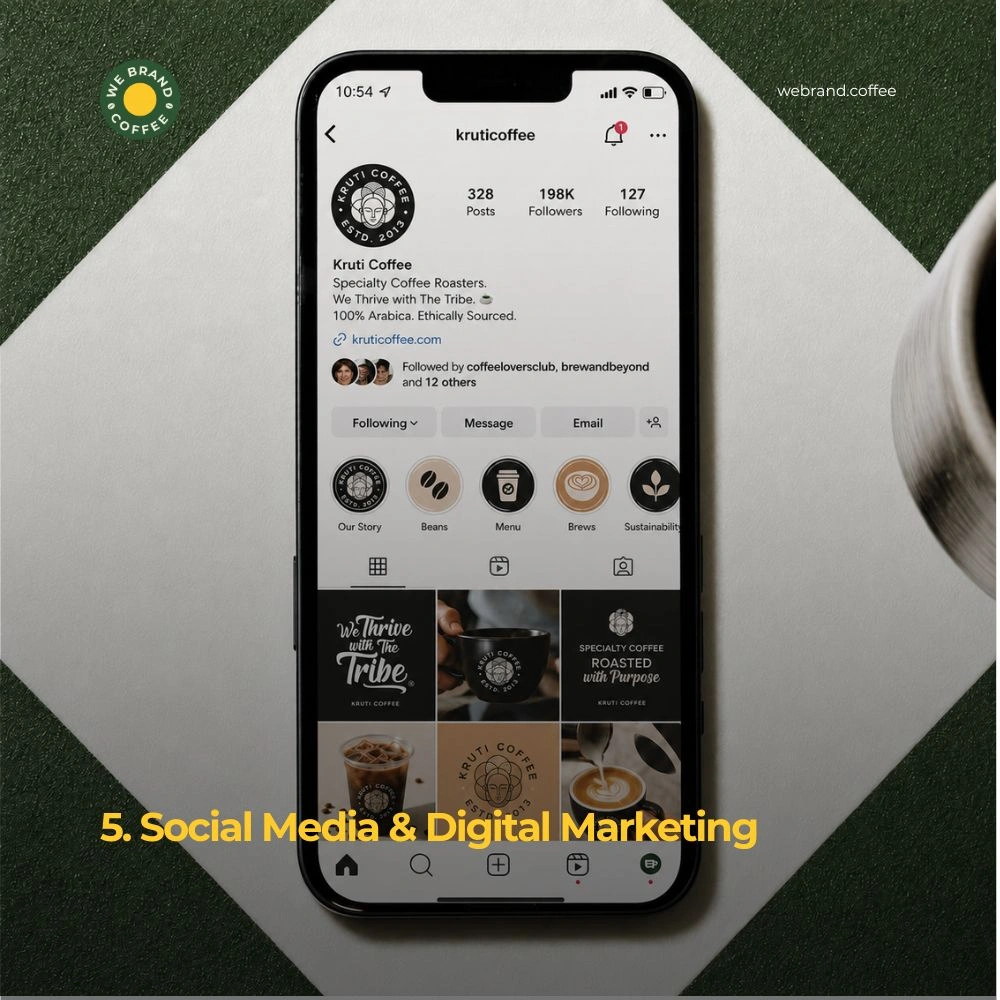
Cafe branding needs social media and digital marketing to enhance the brand identity for a wider audience. Organic and paid content both work if used with proper planning and strategy. Here, you can share your brand story, behind-the-scenes content, roasting process, customer testimonials, etc. You can create content that is trendy as well as run ads that help you reach your desired audience on a wider basis.
6. Café Visualization & Growth Planning
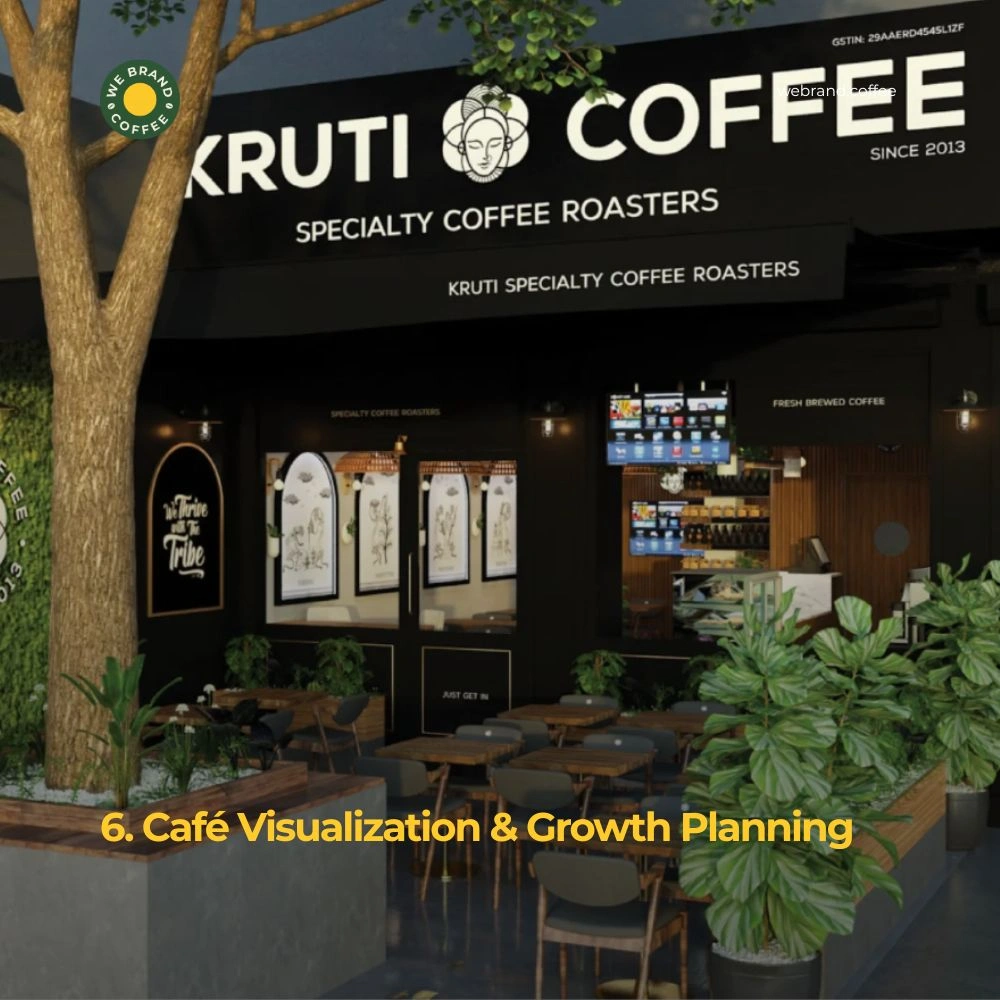
For brands aiming higher than just selling products online, some coffee branding agencies provide help with the expansion of a physical retail store as well, beginning with a visualization of the café concept, which includes turning the digital identity of the brand into a tangible experience via interior design guidance, signs, menu design, and other elements creating the atmosphere.
The right choice of location is at least as important as interior design because no amount of effort devoted to the development of the interior will be enough if the chosen location does not match the target customer and brand image.
In case of further brand growth and expansion, agencies provide help in developing the strategy of growth and further expansion of a brand, allowing brands to plan their next steps in terms of new locations, products, or revenue sources while maintaining their consistent branding at the same time.
This is usually the final step in the process of working with a brand, going from the idea to the strategy and visual identity, to packaging, sales online, and finally to the physical location of a brand.
Conclusion
A coffee branding service, if it is executed successfully, does not consist of simply coming up with a coffee logo design. It is made up of strategic development, identity development, packaging, digital development, marketing efforts, and even retail presence in some cases, all directed toward one thing: making the love of coffee a distinctive and reliable brand that people return to time after time.
Whether you are launching a new brand and want to give your company’s product some identity, or you have already established a certain identity but you feel that you need to change it because your business direction has changed since then, it might be wise to choose an agency that really gets the coffee culture.
Recent Posts
FAQ
Coffee shop aesthetics focus on how a café looks, including its interiors, colour palette, furniture, packaging, and visual style. Coffee branding goes much deeper. It defines what a coffee brand stands for, who it serves, what makes it different, and why customers should choose it over competitors. While aesthetics create a first impression, coffee branding creates long-term recognition, emotional connection, and customer loyalty.
A great coffee shop design can attract attention, but it cannot explain why your business exists or what makes it memorable. Strong coffee branding gives customers a reason to choose your café, recommend it to others, and return repeatedly. Design influences the first few seconds of customer perception, while coffee branding influences how people remember and experience your business over time.
A coffee branding agency helps coffee businesses build a clear and distinctive identity before creating visual assets. This includes developing brand positioning, naming, messaging, brand voice, storytelling, customer experience strategy, packaging direction, and visual identity systems. The goal is to create a coffee brand that communicates a consistent and meaningful story across every customer touchpoint.
Related Posts