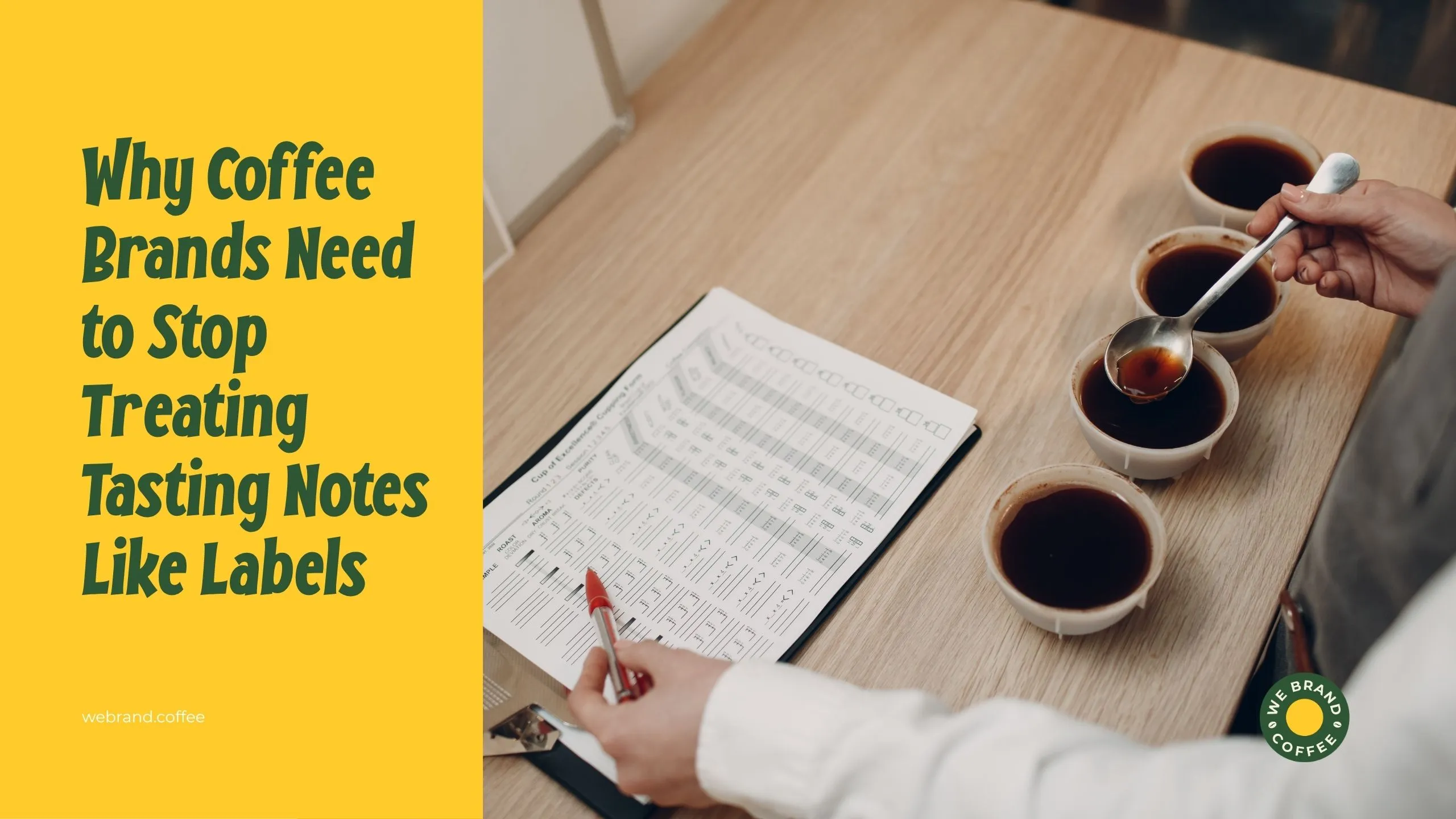
What tasting notes are really saying and (Why Coffee Brands Need to Stop Treating Them Like Labels)
Recent Posts
Share this article:
Coffee brands have a lying problem not intentional lying, the comfortable kind of. This in coffee branding is not a philosophical provocation; rather, it’s neuroscience because the moment you read a tasting note, your brain begins constructing a sensory expectation from the coffee brand. Be it activating flavour memories, priming the relevant receptors, or building a predictive model of what the cup will deliver, by the time the coffee reaches your mouth, your perception is already halfway formed.
So, what you experience in that first sip of coffee reaches your mouth, your perception is already halfway formed and not a neutral encounter with a liquid. What this means in terms of coffee branding and coffee brand packaging is that your tasting notes are not a description of the coffee but a result of instruction given to your nervous system. How you write the flavour brief in the coffee bean packaging, how you design the coffee brand package, and what influence does the coffee packaging hold on the person holding the bag before they have even taken a single sip?
What’s worth noticing is that most coffee brands who understand this write tasting notes on there coffee packaging not to make the coffee taste better but to frame those small quiet decisions that shape every purchase after it. This is something the WeBrandCoffee team have seen and experienced every once in a while and one question that it makes us pick on this condition is the design problem hidden behind this psychology of branding a coffee package.
The coffee tasted nothing like blueberries, so why did the bag say it did?
Matte kraft, clean sans-serif, and three words printed just below the roast date reading” blueberry, dark chocolate, cedar.” Now you go on to make the coffee, filtered water, the right grind, a slow pour, and then you take the first sip with the kind of attention you give something you have good money for. And all of a sudden you realise, no blueberries!
The coffee taste nothing like blueberries, so why did the bag say it did? Well, we have say across the table from enough coffee founders to know how this conversation goes. Thecoffee packaging is done, the roaster is proud of it, the tasting notes of blueberry, dark chocolate, cedar, were copies from the cupping form, typeset neatly beneath the origin story, and signed off without a second though. Then the coffee package goes to print and then the coffee ships.
What happens next is founders being confused between the coffee being exceptional and disappointment in the customers.
As coffee brading specialist, we have seen exceptional coffees disappoint customers all because the story on the bag set the wrong expectation. Here’s a few ways in which says that the conversation around tasting notes is not really about flavour but about communication.
- Tasting notes were never designed for customers, the problem begins when this professional vocabulary is transferred directly onto consumer packaging without translation.
- Customers read “descriptions” as “promises”, because most customers approach a coffee package by reading “blueberry”. What is does is that they expect something that resembles blueberry is someway and not think about aromatic compounds or sensory associations. Now you see where disappointment even from good coffee comes?
- Packaging shapes the first sip with the origin story, the visuals, the roast descriptions, and the tasting notes all contribute to a mental picture of what the coffee would taste like. This is why coffee brand packaging is less of an information design and more of an experience design where evry word influences how the coffee will ultimately be perceived.
Having said that, specialty coffee continues to grow, coffee brands have an opportunity to rethink how they communicate flavour. That is where the expertise of a coffee branding agency comes in where the goal is not to simply tell customers what the cupping table found but to translate it into a great coffee branding.
The design problem hidden inside every coffee bag
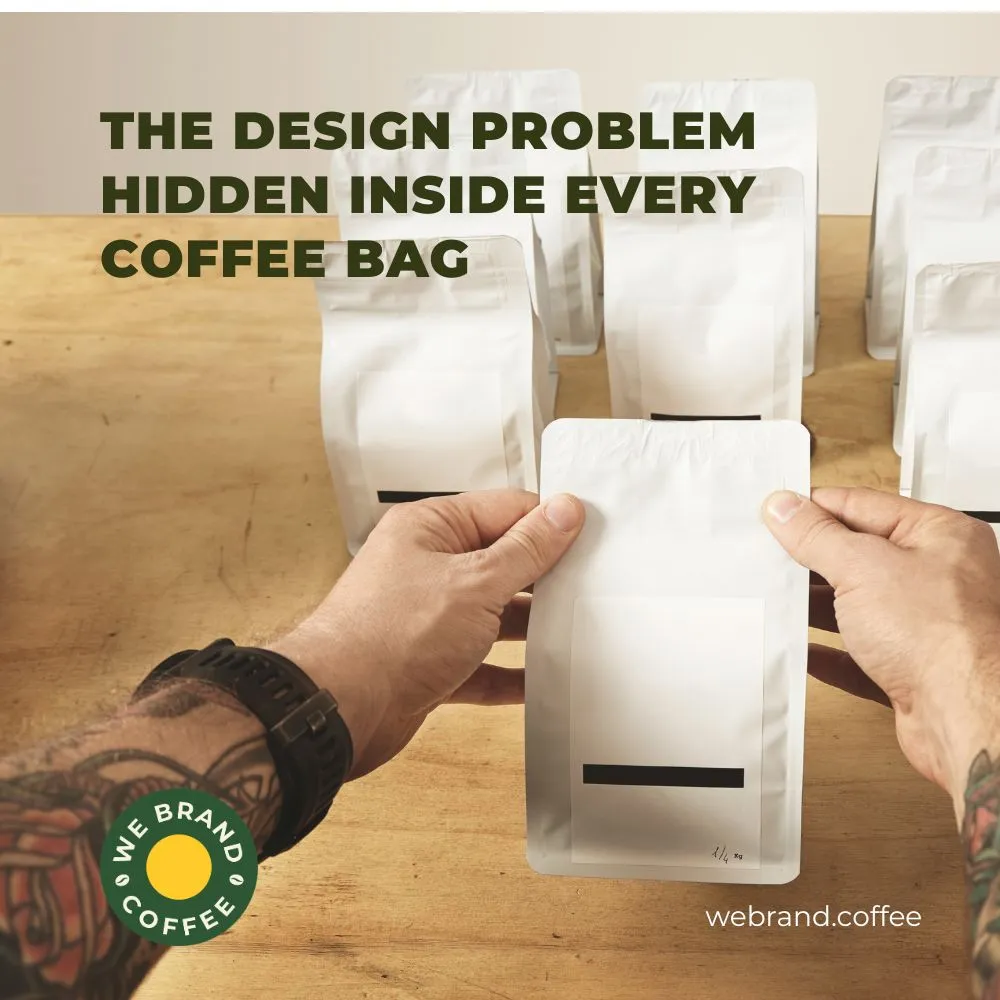
What we have seen is that when most coffee brands think about tasting notes, they end up focusing just on the words like blueberry, dark chocolate, stone fruit, caramel, ect but where our expertise differ as a coffee branding agency is that we design the coffee packaging around the words. While coffee tasting notes are designed like product specifications, a common pattern that appears across speciality coffee packaging is the placement of tasting notes alongside origin, altitude, process, harvest year and bag weight, and with the same typography, hierarchy, and visual treatment.
What this does is that consumers begin treating tasting notes as facts rather than interpretations. However, the problem is not accuracy, it is expectation where one of the most common responses we have heard from coffee brands is that the tasting notes were accurate but where the difference lies is that a trained roaster and an everyday consumer approach flavour very differently which ends up creating an expectation that even exceptional coffee can struggle to fulfill. Apart from that, coffee packaging can accidenltally trun product descriptions into guarantees. What happens when you present tasting notes with the same visual authority as hard product data, coffee brands unintentionally transforms a helpful guide into a perceived information .
Here what the opportunity is for coffee brands to rethink how those coffee notes can in incorporated in their coffee package branding. Because when design creates the right expectations the tasting notes start becoming invitations to explore what’s in the cup.
Can you design the taste of coffee?

At the center of modern coffee branding is the question where can you design the taste of coffee on the coffee packaging? While most consumers think that the taste begins when coffee reaches tongue, in reality the expectation of how the taste would be has already been made in the consumer’s mind through pakcgaing, colour, language, imagery, and expectation and what they end up experiencing is not just coffee but coffee that has been filtered throug context.
Here’s a few factors on which we have learned to reflect the taste of coffee through coffee packaging design:
- Taste is more than what’s in the cup
- Every brand touchpoint shapes flavour perception
- Strongest coffee brans tell one sensory story where all touchpoint is in the smae direction, creating an experience that feels intentional rather than assembled
- Consistency creates memorability where each element work together to create a competing narrative
All in all what makes a great coffee packaging design is the ability of a coffee branding to create that cohesive experience with visual language, storytelling, packaging and flavor communication. That’s what it means to design the taste of coffee, not by altering what’s in the cup bit by shaping everything that arrounds it.
The hidden language of tasting notes: A designer’s guide to flavour storytelling
Now that you know that tasting notes are often treated as a direct translation what happened during cupping, but from a coffee package branding perspective, tasting notes hold different impact, where they are one of the smallest pieces of copy on a coffee package but holds utmost impact. The tasting notes not only introduce the coffee,the frame exectattions but also shapes how the experience will be remembered. The goal with using tasting notes in the coffee packaging design is to communicate what the experience of drinking it feels like.
Here’s a designer’s guide to flavor storytelling in a coffee packaging design:
- Start with the brand, not the flavor wheel
- Every note should earn its place
- Think beyond flavor descriptors
- Write for the ritual, not the purchase
- Match the language to the audience
Some of the most successful coffee brands understand that tasting notes are not the final step of quality control, but are the beginning of customer experience. Tating notes of coffee sits right there at the intersection of product, perception, and storytelling in a coffee packaging design.
Conclusion
In conclusion, if customer consistency tell us that they can’t find the blueberry perhaps the problem is ot their palate but the tasting notes that were never meant to be a marketing copy. Yet tasting notes in coffee packaging design has become a technical output andone of the most influential piences of customer-facing communication a brand possesses.
Hence, the coffee brands who will start out in the years ahead won’t necessarily be the ones with the most complex ocffees or the most sophisticated flavour vocabulary.
Recent Posts
Related Posts