Did You Know Your Roast Level Is Already Defining Your Coffee Brand Identity?
Recent Posts
Share this article:
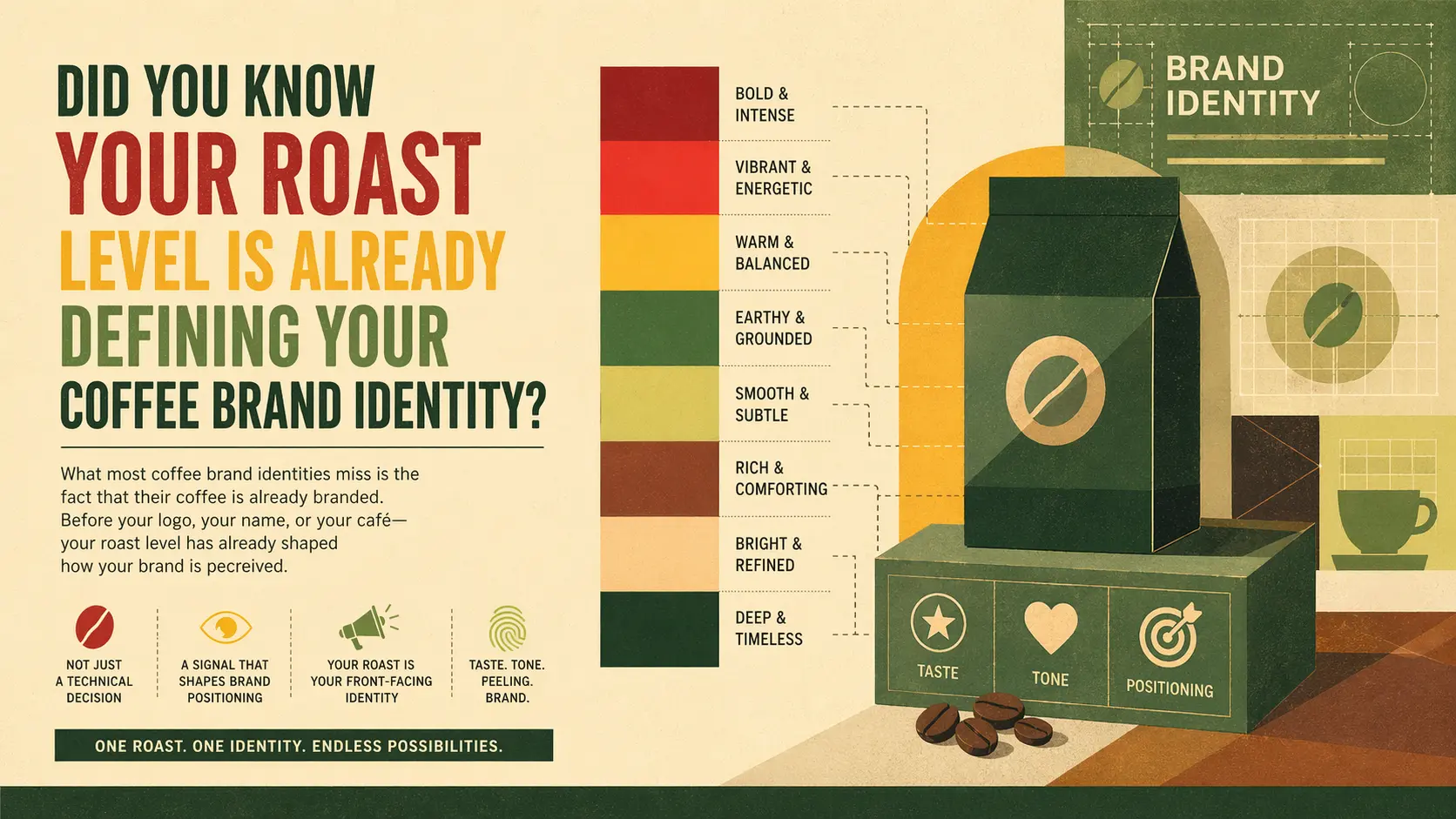
What most coffee brand identities miss is the fact that their coffee is already branded. It is usual for you as a coffee brand to believe that your identity begins with a logo, a name, or a beautifully designed coffee cafe. However, before any of that comes into play, the brand has already taken shape in a far less obvious place, which is the roast level.
In a coffee shop brand identity is something that you design later; roast is what’s already defined. Light, medium, or dark is not just a technical decision but a signal to shape how your coffee is positioned in the market. But the problem exists because most coffee brands treat roasts like a backend production choice. But in reality, your coffee roast levels are the front-facing identity.
Your coffee roast influences not just the taste, but the tone, feeling and ultimately a brand. But how do you position your coffee brand identity with just the roast profiles? Is it possible to market just with that? Let’s decode it with We Brand Coffee.
Why roast level is the foundation of coffee branding strategy?
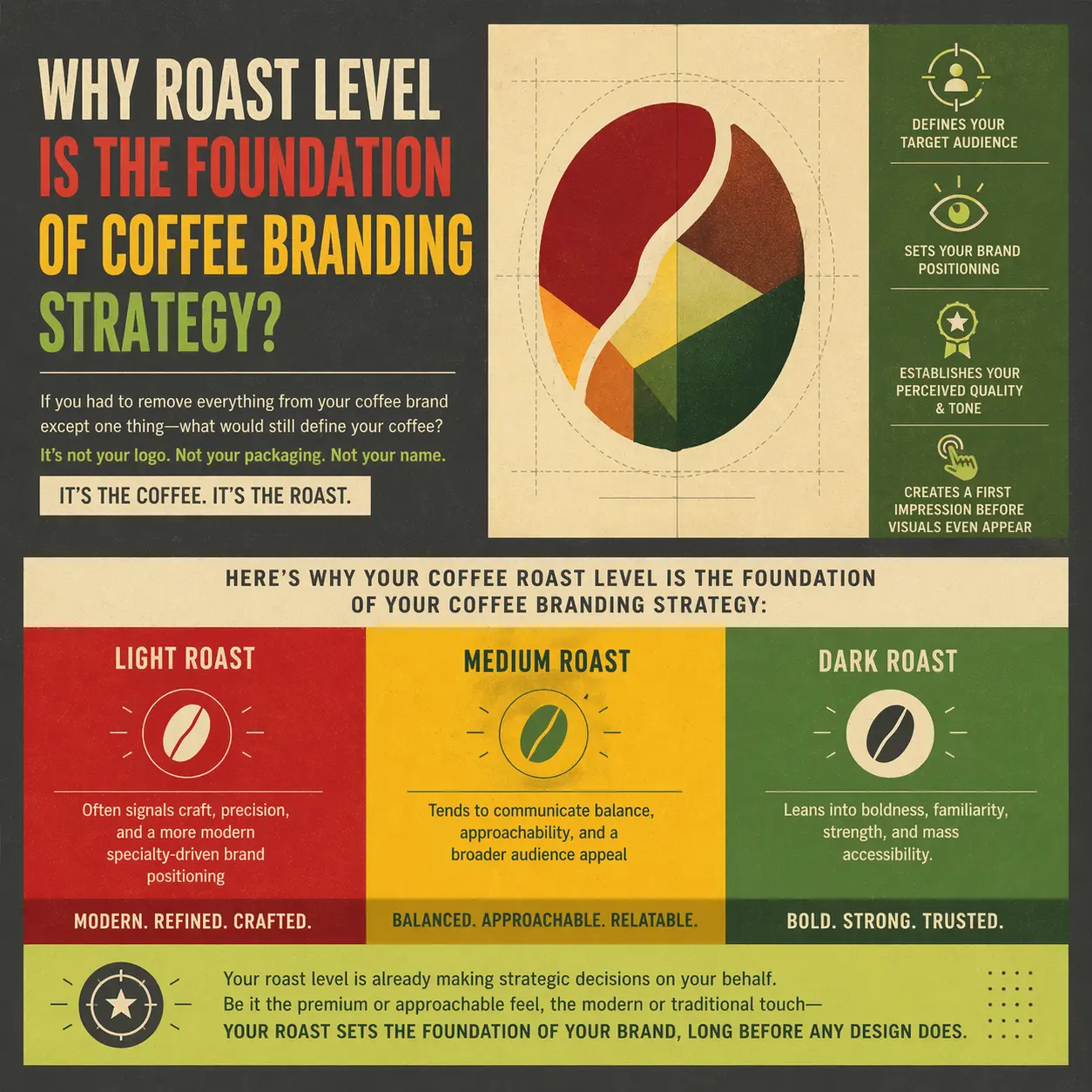
Let’s put it this way, if you had to remove everything from your coffee brand except one thing what would still define how you coffee is? Logo? Packaging? Coffee brand name? No, it would be your coffee alone. It would be how that coffee tastes, and how it feels.
Which brings us to the roast levels. So, whether you realise it or not, your coffee’s roast level is already making strategic decisions on your behalf. Be it the premium or approachable feel, the modern or traditional touch, your roast plays a major role in setting the foundation of your coffee branding strategy.
Here’s why your coffee roast level is the foundation of your coffee branding strategy:
- A light roast often signals craft, precision, and a more modern specialty- driven brand positioning
- A medium roast tends to communicate balance, approachability, and a broader audience appeal
- A dark roast leans into boldness, familiarity, strength, and mass accessibility.
Having said that, each of these is not just a taste profile; they are your coffee brand signal. It not only influences who your audience is, what they expect, and how they emotionally connect with your coffee. Which in turn also means that your roast level is already defining your target audience, setting your brand positioning, establishing your perceived quality and tone, along with creating a first impression before visuals even appear.
What light, medium, and dark roasts communicate to your customers?
Do roast levels drive coffee packaging design decisions?
While customers don’t consciously read roast levels, they do respond to them instantly. To be honest, consumers don’t notice the coffee logo design, coffee packaging design, or your cafe space; rather, they notice the experience they would have through taste. It’s the first sip that signals quality, intent, and positioning.
And at the centre of these signals is the roast level. What we have seen as a coffee branding agency is that most coffee brands assume that customers only “taste” coffee, but in reality, they interpret it.
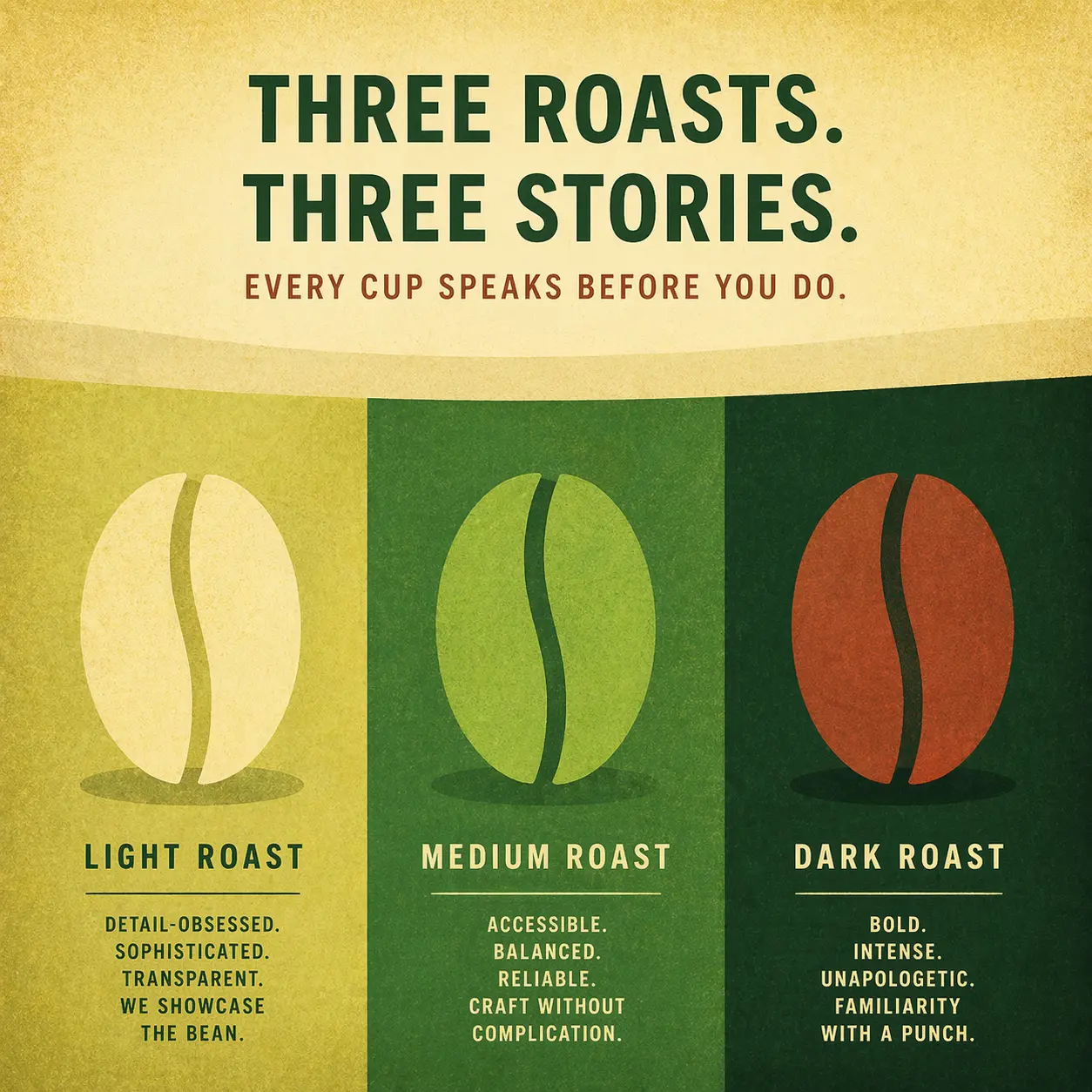
Here’s what light, medium, and dark roasts tell your consumers about your coffee:
- Light roast
It attracts the detail-obsessed, sophistication, transparency, and a kind of quiet confidence that you are not hiding behind roast, but rather you are showcasing the bean.
- Medium roast
It communicates accessibility, it reflects that your coffee brand identity is balanced, reliable, thoughtful, and your coffee is for the people who want craft without complication.
- Dark roast
Dark roast is less about origin, and more about experience; it gives your coffee brand identity a sense of bold, intense, and unapologetic. Your coffee brand identity attracts those who want familiarity with a punch.
Having said that, using your roast profiles just as a checkbox on the menu is one of the biggest coffee branding mistakes. This is because strong coffee brand identity always uses the rest profiles through the coffee brand strategy to position their brand in the market.
What We Brand Coffee has understood with years of experience in coffee branding is that coffee packaging has one fundamental challenge, which is that you are selling a sensory experience that your consumers cannot access yet. No aroma, no taste, no texture, just a bag on a shelf.
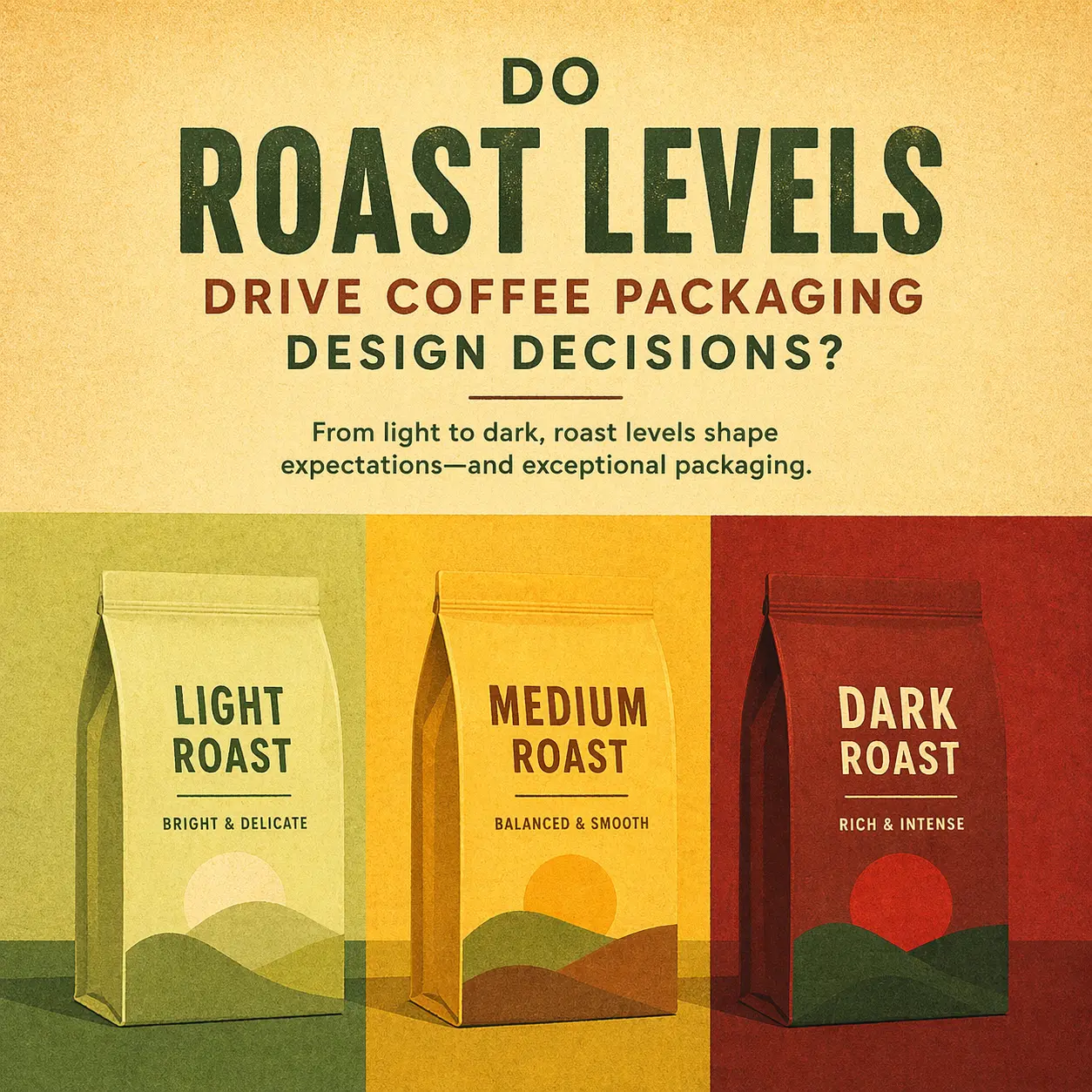
Then, how do you make an exceptional coffee packaging design? Yes, by taking roast levels as the influencing factor for the coffee packaging design. Here’s how:
- Light roast coffee packaging design
Package design for light roast coffee calls for pastels, minimal layouts, and generous whitespace. Here it is not about looking good but more about clarity so that when a customer sees a light-toned pack, they expect something delicate.
- Medium roast coffee packaging design
However for medium roast, both flavour and the design language needs balance. Balance of warm neutrals, structured typography, and a sense of approachability. The medium roast coffee packaging design is less about standing out loudly and more about feeling familiar.
- Dark roast coffee packaging design
Bold, heavy, unapologetic that is what coffee packaging design for dark roast coffee means. High contrast, dense colours, and sometimes even aggressive typography is what gives your coffee brand identity that intense impact.
However, good coffee branding strategy doesn’t just follow the roast levels rather we interpret them, and that’s where the brand moves from functional to memorable.
How to use roast levels in coffee brand strategy and positioning?
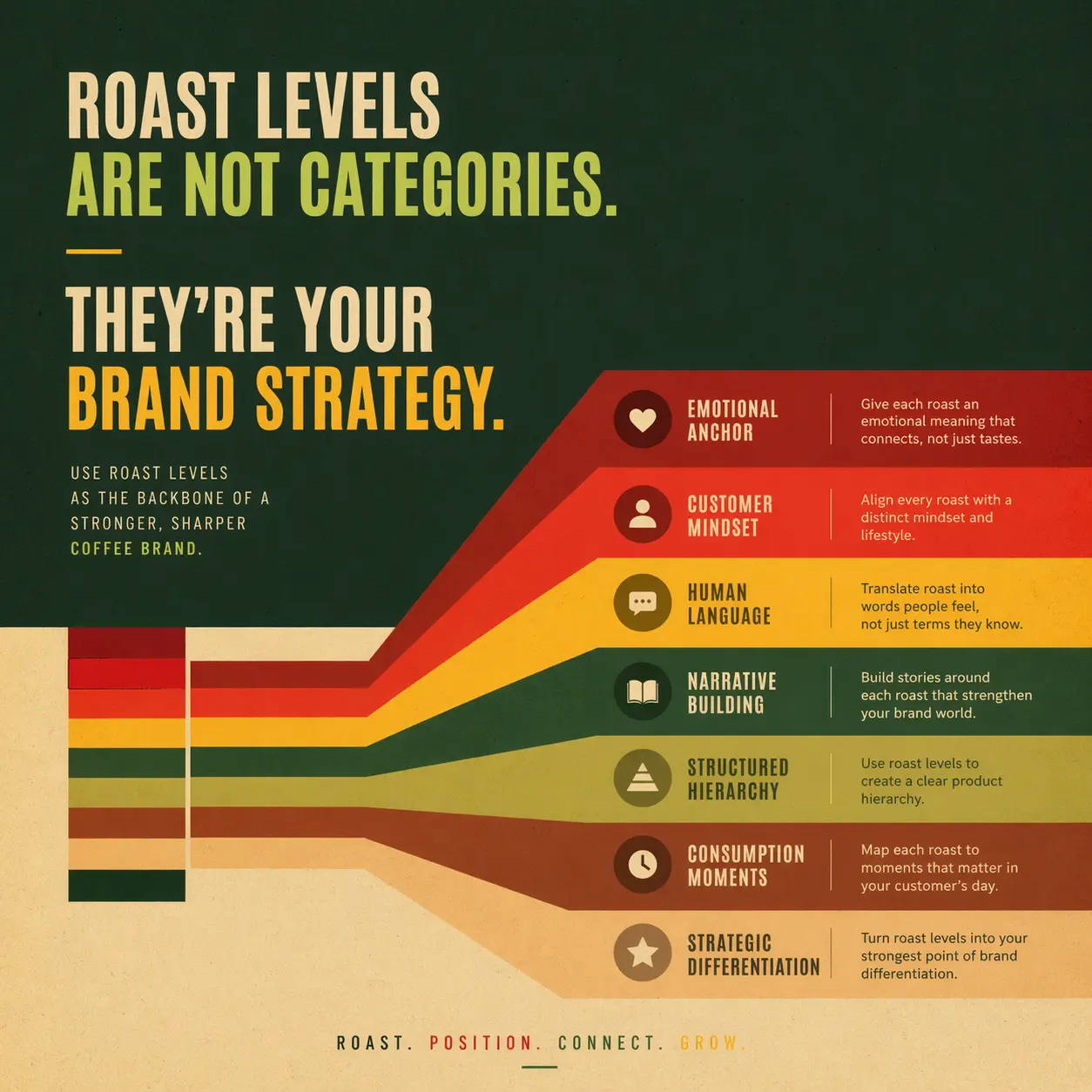
There is no secret in the fact that a lot of coffee brands organise their product lines around roast levels, but where We Brand Coffee steps in as a coffee exclusive branding agency is by not just stopping at categorising but making it functional. What if the roast levels became the backbone of your brand architecture instead?
Having said that, the roast level holds the potential to become one of the most sharpest coffee branding strategies when used intentionally.
- Use roast levels as emotional anchors, not just technical labels
- Align each roast with a distinct customer mindset
- Translate roast into human language
- Build brand narratives around each roast tier
- Use roast level to structure your coffee’s hierarchy
- Map the roast levels to consumption moments
Moreover, roast levels are not just about how coffee tastes, so build your coffee brand identity in a way which is functional and unforgettable.
Conclusion
In conclusion, most coffee brands spend months perfecting coffee brand identity and the coffee packaging design but one thing that gets overlooked is your consumer’s experience. And your roast level holds the first impression, acts as a silent positioning, communicates your coffee brand identity values, and shapes how your brand should look, sound, and behave.
Hence, make sure to ask your coffee branding agency in bangalore how to use the roast profile to build a unique coffee brand identity.
FAQ
Light roasts convey specialty craft and subtle origin flavors, whereas dark roasts communicate traditional, bold intensity. Your core roast profile naturally dictates your target audience, coffee packaging design aesthetics, and overall coffee cafe brand tone.
Light and medium roasts pair best with clean, minimalist food pack design, pastel or soft earth tones, and modern typography. This aesthetic aligns visually with the delicate floral and fruity flavor profiles specialty drinkers expect.
Dark roasts benefit from deep, rich color palettes like charcoal, espresso brown, gold foil accents, and bold classical typography in their FMCG packaging design. Heavy visual elements communicate full-bodied warmth, strength, and classic dark chocolate intensity.
Yes, provided the food packaging and design utilizes a clear color-coded system architecture to distinguish roast profiles effortlessly. A unified brand layout keeps the product line cohesive while distinct roast colors guide customer selection.
Specialty light-roast single origins often command higher price points due to precise sourcing and complex flavor profiles. Aligning your food product package design with roast complexity ensures customers understand and accept the corresponding price tier.
Recent Posts
Related Posts